
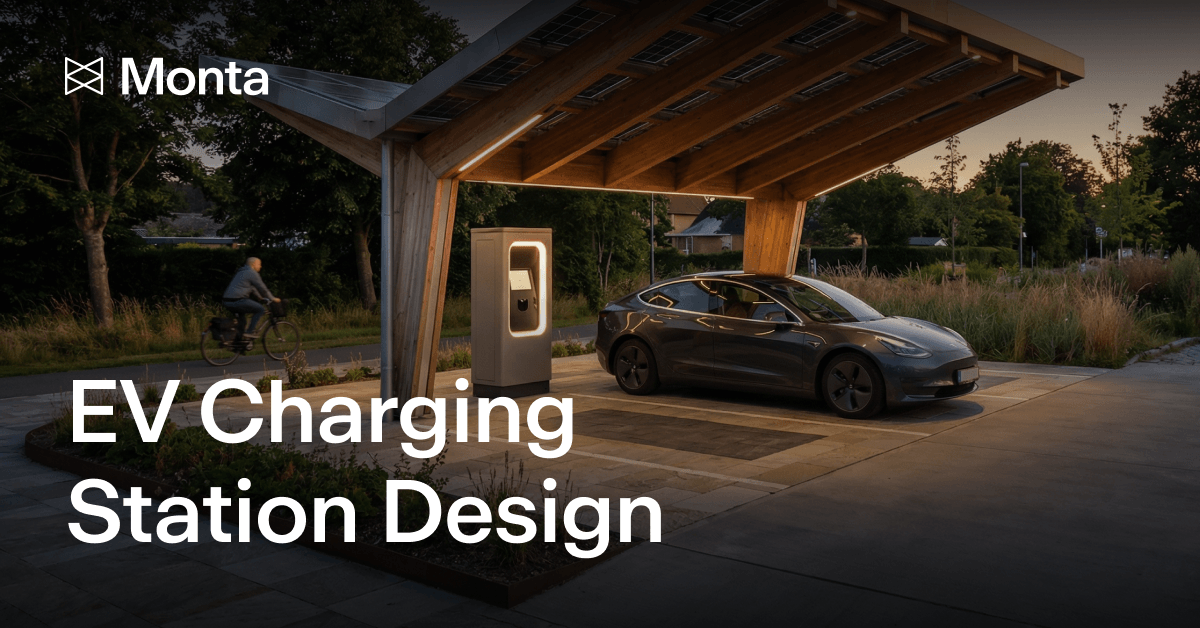
EV charging station design encompasses the physical, electrical, and software planning needed to deploy a functional and scalable charging location. Effective station design balances user accessibility, grid capacity, and future expansion requirements. Poorly planned installations lead to underused assets, excessive operating costs, and poor driver experience. Thoughtful EV charging station design supports operators in maximizing revenue while ensuring long-term compatibility with evolving vehicle standards. Modern EV charging infrastructure demands a systems approach that integrates civil engineering, power distribution, and digital management. Planners must account for factors ranging from cable routing to user interface design. Comprehensive EV charging station design ensures that installations remain safe, cost-effective, and ready for growing demand.
What Is EV Charging Station Design?
EV charging station design is the structured process of planning and specifying all components required to build a safe and efficient electric vehicle charging location. The discipline covers site selection, electrical capacity assessment, charger specification, and civil engineering preparation. Designers coordinate between property owners, utilities, and equipment suppliers to align technical requirements with operational goals. Station design incorporates user experience considerations such as accessibility, signage, and lighting alongside back-end infrastructure. A strong design phase reduces costly modifications during construction and minimizes long-term maintenance demands. Regulatory compliance and safety certification form non-negotiable foundations of any credible EV charging station design.
How Is an EV Charging Station Designed?
An EV charging station is designed through a sequential process that begins with a site assessment and concludes with commissioning and testing. Engineers evaluate the available electrical supply, ground conditions, and user traffic patterns at the proposed location. Load calculations determine the total power demand generated by the planned number of chargers operating simultaneously. Civil designers specify the groundwork, including cable trenching, surface materials, and protective bollard placement. Electrical schematics define the connection between the utility supply and each charger unit. Network architecture plans detail the communication links between individual chargers and the central management platform. Each stage of EV charging station design requires sign-off from qualified engineers to maintain regulatory and safety standards.
What Are the Key Factors in EV Charging Station Design?
The key factors in EV charging station design are listed below.
- Location and Accessibility: The site must be reachable, visible, and convenient for the target users throughout the day.
- Electrical Capacity: Available grid power dictates the number and speed of chargers that can operate without costly upgrades.
- Charger Type and Power Level: Selecting the appropriate charging speed aligns hardware investment with user dwell time at the location.
- Civil and Site Infrastructure: Ground preparation, cable routes, and surface finishes must support safe and durable equipment installation.
- Scalability: Reserving electrical capacity and conduit space allows future expansion without dismantling the original installation.
- User Experience: Lighting, accessibility compliance, signage, and payment options influence driver satisfaction and repeat usage.
What Factors Affect EV Charging Station Design?
The factors that affect EV charging station design include the local electricity network capacity, site ownership constraints, and anticipated user behavior. Grid connection strength limits the total power available for simultaneous charging events. Planning restrictions and local authority requirements shape the physical layout and appearance of the installation. User demographics determine the preferred charging speeds and payment methods that drive equipment selection. Environmental conditions such as coastal exposure or extreme temperatures influence the IP rating and thermal management specifications for hardware. Real estate constraints dictate available space, affecting the total number of bays and the arrangement of chargers. Budget limitations balance the ambition of the initial design against phased expansion plans for future growth.
How Much Space Is Needed for EV Charging Stations?
EV charging stations require a minimum bay width of 8.2 feet for standard vehicles and at least 11 feet for accessible spaces compliant with ADA guidelines. Each bay needs adequate depth to accommodate the longest electric vehicles in the target market, typically a minimum of 18 feet. Cable management infrastructure requires additional clearance beside and behind the charger unit. DC rapid chargers have larger footprints than AC wall-mounted units and need additional ventilation space. Drive aisles adjacent to charging bays must be wide enough for large SUVs and trucks to maneuver safely. Service access corridors behind units allow technicians to perform maintenance without disrupting active charging sessions.
What Are the Electrical Requirements for EV Charging Stations?
The electrical requirements for EV charging stations depend on the power level of the planned chargers and the number of simultaneous sessions. Level 2 AC chargers require a 208V/240V single-phase supply, while DC fast chargers demand a 208V/480V three-phase feed. The main electrical panel must have sufficient capacity to handle peak loads without tripping protective devices. Dedicated circuits with appropriately rated circuit breakers protect each charger from overload events. Surge protection devices guard sensitive electronic components against voltage spikes from the distribution network. Earthing and bonding requirements ensure the safety of users who contact the equipment during a charging session. Load management systems distribute available power intelligently to prevent any single circuit from exceeding its rated capacity.
How Do You Select a Site for EV Charging Station Design?
Selecting a site for EV charging station design involves evaluating grid proximity, user footfall, and land ownership suitability together. Locations near existing electrical substations reduce the cost and time required to establish a high-power grid connection. High-traffic destinations such as retail centers, hospitality venues, and highway rest areas maximize charger utilization rates. Secure and well-lit environments improve driver confidence and reduce the risk of equipment vandalism. Flat or gently sloping terrain lowers civil engineering costs compared to sites requiring significant groundwork. Proximity to amenities encourages drivers to remain on site during longer charging sessions, improving the commercial viability of the project. Early engagement with the local utility authority confirms whether the network can support the anticipated power demand.
What Makes a Good EV Charging Station Layout?
A good EV charging station layout provides clear vehicle access, efficient use of space, and straightforward cable management. Parking bays should be oriented so that charging cables reach the inlet of all vehicles without stretching across walkways. Charger units benefit from positioning near the front of a parking lot to maximize visibility and wayfinding ease. Pedestrian pathways must be separated from vehicle lanes to meet accessibility and safety requirements. Cable management channels protect wiring from mechanical damage while maintaining a clean appearance. Signage at entrances and above individual bays communicates availability and pricing information to approaching drivers. Thoughtful layout design reduces congestion and allows multiple vehicles to enter and exit bays without blocking one another.
How Are Safety Standards Applied in EV Charging Station Layout Design?
Safety standards are applied in EV charging station layout design through adherence to national electrical codes, fire regulations, and ADA accessibility requirements. Protective bollards shield charger units from accidental vehicle impact in all layout configurations. Minimum clearance distances between chargers, walls, and other structures prevent heat buildup and ensure safe maintenance access. Fire-rated materials protect underground cable installations from heat and mechanical stress. Ground fault circuit interrupters prevent electric shock hazards for users in wet conditions. Emergency stop mechanisms are integrated into charger designs to allow rapid power isolation in the event of an incident. Regular inspections by qualified electricians verify ongoing compliance with current safety legislation.
What Power Levels Are Best for EV Charging Station Design?
The best power levels for EV charging station design depend on the typical dwell time of vehicles at the site and the available grid supply. Slow AC chargers rated at 3.7 kW to 7.4 kW suit residential or overnight workplace charging where vehicles remain connected for extended periods. Fast AC chargers rated at 11 kW to 22 kW are appropriate for workplace and retail settings where vehicles stay for two to four hours. DC rapid chargers rated at 50 kW to 150 kW serve highway locations where drivers seek a partial charge within 20 to 40 minutes. Ultra-rapid DC chargers rated at 150 kW and above maximize throughput at high-demand public hubs and highway corridor locations. Mixing power levels within a single site allows operators to serve diverse user needs while managing grid connection costs.
What Charger Types Are Best for EV Charging Station Design?
The charger types best suited for EV charging station design are determined by the use case, vehicle compatibility, and available electrical infrastructure. Level 2 AC chargers with SAE J1772 connectors are the standard choice for residential, workplace, and public parking installations across North America. CCS combo chargers support DC rapid charging for most contemporary battery electric vehicles and are preferred for highway and fleet depot locations. CHAdeMO units serve vehicles such as the Nissan Leaf that use the Japanese DC charging standard. Multi-standard pedestals combining CCS and CHAdeMO connectors maximize compatibility at public sites. Network-connected smart chargers allow remote monitoring, dynamic pricing, and load management, which improves asset efficiency across large installations.
How Does EV Charging Station Design Differ by Use Case?
EV charging station design differs by use case based on the power requirements, user behavior, and operational management priorities of each environment. Residential designs prioritize simple installation, low cost, and scheduled overnight charging. Public urban stations focus on accessibility, rapid throughput, and diverse payment methods. Highway corridor hubs demand ultra-rapid chargers, robust civil works, and reliable grid connections. Fleet depot designs integrate smart load management to handle the simultaneous overnight charging of large vehicle numbers. Workplace installations balance employee convenience with cost control through access restrictions and energy scheduling. Each use case drives distinct choices in charger specification, site layout, and network management software within EV charging station design.
Public EV Charging Station Design
Public EV charging station design prioritizes user accessibility, high hardware availability, and simple payment processes. Locations in city centers, retail parks, and transportation hubs require chargers that accommodate a wide range of vehicle types and connector standards. Vandal-resistant housings and IP-rated components protect equipment in exposed urban environments. Contactless and app-based payment systems remove barriers for infrequent users who lack subscription accounts. High-visibility signage and real-time availability data displayed on in-car navigation systems drive utilization rates. ADA-compliant bay dimensions and approach routes ensure the station serves all members of the community. Operators rely on remote monitoring software to minimize downtime and dispatch maintenance teams promptly.
Fleet and Depot EV Charging Design
Fleet and depot EV charging design focuses on maximizing the number of vehicles recharged overnight within a fixed power budget. High-density charger layouts use dynamic load management to distribute available power across all connected vehicles simultaneously. Dedicated electrical infrastructure, including reinforced concrete cable routes and high-capacity transformers, supports the demands of large fleets. Software systems prioritize vehicles with earlier departure times to guarantee operational readiness each morning. Robust AC charging at 11 kW to 22 kW per bay provides an effective balance between overnight charge completion and hardware cost. Data reporting tools track energy consumption, charging efficiency, and cost per mile across the entire fleet.
Workplace and Commercial EV Charging Design
Workplace and commercial EV charging design supports employee benefit programs and sustainability commitments by providing convenient charging during work hours. Access controls restrict usage to authorized employees or permit public access to generate additional revenue during off-peak periods. Load management software prevents demand charges from escalating during morning plug-in peaks. Billing integration enables employers to reimburse employees for energy consumed at work or to charge users directly at a defined rate. Parking bay allocation ensures that charging spaces remain available for electric vehicles rather than being occupied by non-EV users. Installation of cable management covers and decorative bollards maintains a professional aesthetic consistent with the commercial environment.
How Much Does It Cost to Design an EV Charging Station?
Designing an EV charging station costs $1,900 to $5,100 for a standard AC pedestal installation at an existing commercial property. DC rapid charger projects involve significantly higher civil and electrical costs due to the higher power demands and more complex site requirements. Grid connection upgrades represent the largest variable expense and can multiply the total project budget depending on proximity to the existing network. Professional engineering fees, permit applications, and utility coordination add fixed costs that scale with project complexity. Government grants and tax incentives partially offset capital expenditure for qualifying installations. Long-term maintenance contracts, software subscriptions, and energy costs form the ongoing financial obligations of the station operator.
What Are the Best Practices for Future-Proof EV Charging Station Design?
The best practices for future-proof EV charging station design are listed below.
- Oversize the Electrical Supply: Installing a grid connection rated above the immediate requirement allows charger upgrades without costly future network works.
- Install Spare Conduits: Laying empty cable ducts during initial groundworks eliminates the need for destructive excavation when adding chargers later.
- Select Network-Capable Hardware: Smart chargers with open communication protocols allow integration with future energy management systems and grid services.
- Design for Accessibility From the Start: Incorporating ADA-compliant dimensions and features during initial design avoids expensive retrofits to meet evolving regulations.
- Use Modular Charger Architecture: Choosing chargers that accept power module upgrades extends hardware life and reduces replacement costs as vehicle charging speeds increase.
How Can EV Charging Station Design Support Scalability and Grid Constraints?
EV charging station design supports scalability by reserving electrical headroom, physical space, and data infrastructure for future expansion. Smart load management software limits simultaneous peak draw, allowing more chargers to operate within the same grid connection capacity. Modular switchgear in the main electrical panel allows new circuits to be added without replacing the entire distribution board. Conduit routes sized for future cable volumes prevent the need for additional groundworks when the site expands. Battery storage systems integrated into the station design provide peak shaving capabilities that reduce demand charges while supporting higher charger densities. Proactive communication with the utility authority ensures that grid reinforcement programs align with the operator’s long-term expansion schedule.
What Are the Common EV Charging Station Design Mistakes to Avoid?
The common EV charging station design mistakes to avoid are listed below.
- Underestimating Electrical Capacity: Failing to account for simultaneous peak loads leads to charger throttling and poor user experience from day one.
- Ignoring Accessibility Requirements: Non-compliant bay dimensions and approach routes expose operators to legal liability and exclude a segment of potential users.
- Selecting Hardware Without Network Connectivity: Non-networked chargers cannot support remote monitoring, dynamic pricing, or load management, limiting commercial performance.
- Omitting Spare Conduit and Cable Routes: Without pre-installed infrastructure, adding chargers in the future requires disruptive and expensive groundworks.
- Neglecting User Experience in Layout Design: Poorly positioned chargers, inadequate lighting, and absent signage reduce utilization rates and damage the operator’s reputation.