
The EV charging industry is scaling fast – faster than most operational models were designed for.
Across markets, networks are growing in size and complexity. More chargers, more sites, more drivers, more payment methods, and more grid constraints. Yet in many cases, operations are still managed through manual monitoring, fragmented tools, and a small number of technical experts expected to hold everything together.
That model does not scale.
At Monta, this reality has shaped how we think about AI. Monta AI is an operational intelligence layer embedded directly into the Monta platform, designed to reduce the effort required to understand and run complex charging networks. Rather than acting as a standalone tool, it continuously analyses network operations in the background and makes that intelligence accessible across teams – whether through proactive insights or natural-language interaction.
In this article, I want to explore how AI can practically help EV charging operators run more reliable, efficient, and scalable networks – not as a future promise, but as an operational capability that already works today.
The core challenge: complexity outpacing operations
Running a charging network means managing multiple layers at once:
- Charging hardware and firmware
- OCPP communication and session data
- Payments and transaction flows
- Customer support and driver experience
- Pricing, utilisation, and site performance
- Energy constraints and load management
When something goes wrong – a failed charging session or a sudden drop in success rate – teams often need to piece together insights across several systems. That process is slow, costly, and dependent on scarce expertise.
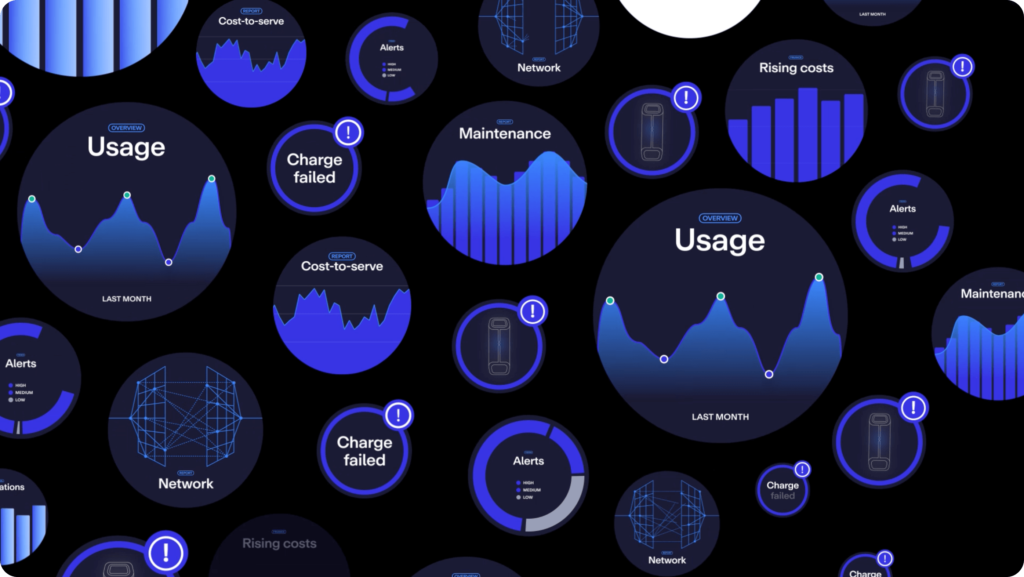
As networks scale three-, five-, or ten-fold, this creates a growing gap between infrastructure scale and operational capacity.
This is where AI starts to deliver real value.
Step 1: Turning data into operational understanding
Most charging networks already generate vast amounts of data. The challenge is not availability – it’s usability.
AI can ingest and reason across operational signals such as charging session telemetry, OCPP logs, firmware and hardware data, payment outcomes, customer support interactions, pricing and utilisation metrics, and energy data. Monta AI is designed to reason across these signals simultaneously, allowing operators to move from isolated data points to a coherent understanding of what is happening across chargers, sites, and regions.
Instead of manual investigation, teams can quickly understand why sessions are failing, whether issues are recurring, and which actions will have the biggest impact.
Step 2: Moving from reactive to proactive operations
AI will not just help operators do existing tasks faster – it will unlock entirely new capabilities that were not previously possible at scale. Just as tools like Excel transformed finance by giving analysts the ability to model complexity rather than replacing them, and as increased computing power allowed consultants to take on far more ambitious projects,
AI will become an operating layer that expands what charging operators can realistically manage. By putting new forms of intelligence directly into their hands, AI will reshape how networks are designed, operated, and scaled – and this is only the beginning.
Historically, most charging operations are reactive:
- A driver reports a problem
- A support ticket is created
- An investigation begins
AI allows operators to flip that model.
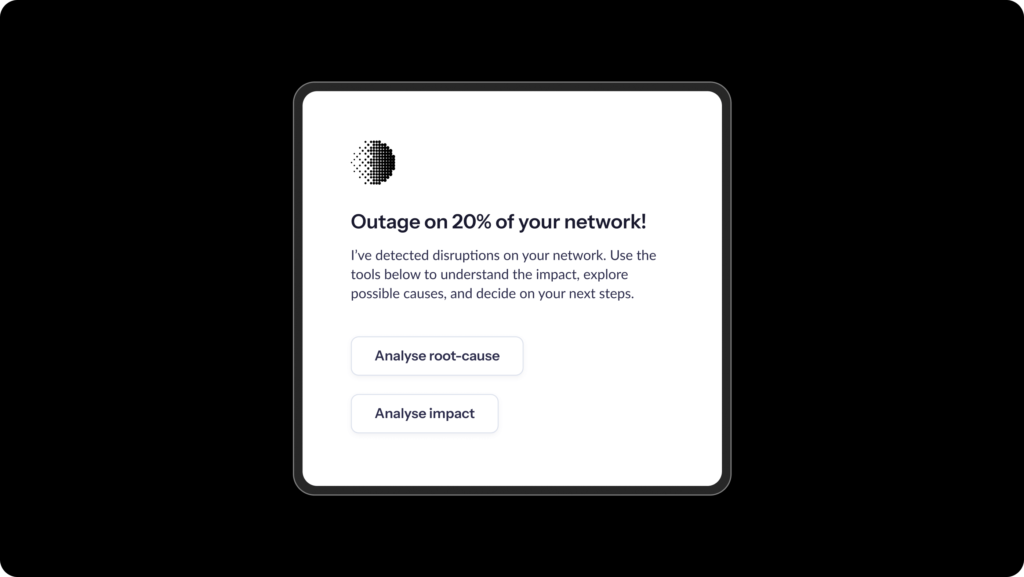
By continuously analysing live network behavior, Monta AI surfaces emerging issues early, helping teams intervene before failures escalate or affect drivers. Reliability improves not because teams work harder, but because problems are identified earlier and resolved automatically.
Step 3: Making expertise accessible across teams
One of the biggest bottlenecks in charging operations is that deep technical knowledge often sits with a very small number of people.
AI changes that dynamic. Instead of requiring teams to interpret logs or firmware documentation, Monta AI translates technical signals into clear, actionable insight. Anyone who can identify a charging session or site can access the same operational understanding that previously required specialist expertise.
AI does not replace expertise – it amplifies it and makes it accessible across the organisation.
Step 4: Automating what shouldn’t require human effort
Once understanding improves, the next step is automation.
Many operational tasks are repetitive by nature: identifying known failure patterns, rolling out firmware updates, adjusting pricing, or triggering preventative maintenance. Monta AI supports this transition by identifying where automation is safe and effective, while keeping operators in control of when and how actions are executed.
This reduces operational load and allows teams to manage larger networks without linear increases in headcount.
AI in practice: what this looks like today
These ideas are no longer theoretical.
In production environments today:
- AI-powered systems already handle a large share of customer support interactions automatically. At Monta, AI already resolves 79% of incoming driver support tickets by correlating charging session data, OCPP logs, charger behavior, and historical resolutions, rather than relying on generic responses.
- Root causes of failed charging sessions can be identified in seconds rather than hours
- Success rates can improve dramatically once underlying issues are surfaced. Monta AI is already delivering measurable results in production. One operator saw a DC charger’s success rate increase from 31.2% to 98.3% in just 25 seconds after Monta AI identified a firmware mismatch causing repeated failures.
These capabilities are already deployed within Monta AI, which is used daily by operators to diagnose issues, improve reliability, and reduce operational friction across growing networks.
From proactive systems to autonomous operations
AI enables a shift from reactive troubleshooting to proactive systems by default. In the near term, Monta AI supports operators by diagnosing issues, surfacing recommendations, and helping teams act faster with greater confidence.
Over time, this intelligence evolves into assisted automation, where workflows such as maintenance actions, pricing changes, or firmware rollouts can be partially automated while humans remain in control. Longer term, the ambition is to support autonomous charging operations, where software orchestrates optimisation across the network with minimal intervention.
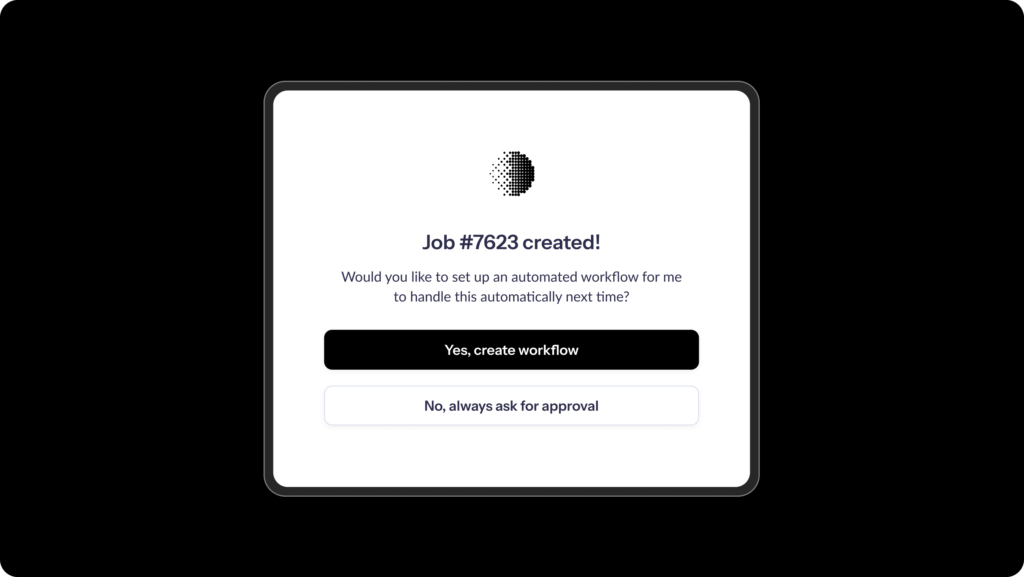
AI as an operating layer
The most impactful AI in EV charging will not be the most visible. It will be the intelligence that quietly improves uptime, reduces friction, and makes complexity manageable as networks scale.
Monta AI is built with that ambition in mind – not as an add-on, but as an operating layer that helps charging networks run more reliably as they grow. As the industry matures, AI’s role will increasingly be to make complexity manageable – and, over time, largely invisible.