
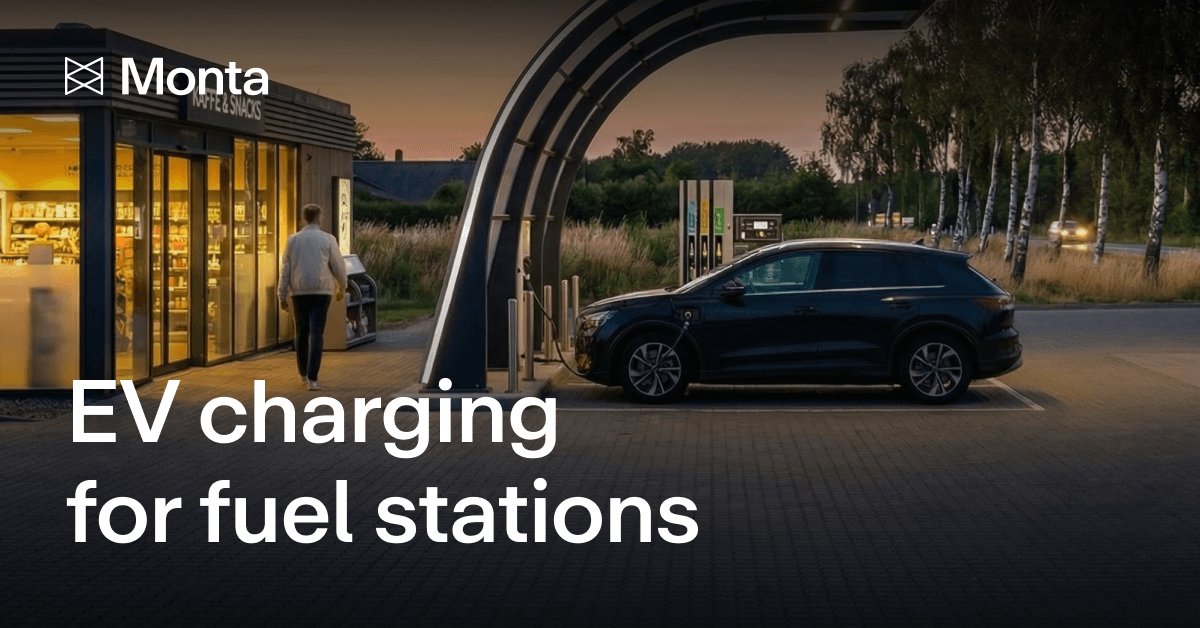
EV charging for fuel stations represents the evolution of traditional petrol and diesel sites into multi-energy hubs that deliver electricity alongside liquid fuels, allowing fuel retailers to maintain high-traffic locations while supporting electric mobility. Fuel stations adapt to longer charging dwell times without abandoning established refuelling patterns by integrating high-power DC fast chargers, upgraded grid connections, digital payment systems, and layouts designed for efficient vehicle flow. Unlike conventional petrol stations that focus on rapid liquid fuel transfer, EV charging sites operate as managed energy environments where power availability, charging duration, and customer on-site engagement play a central role. The shift changes infrastructure needs, customer behaviour, and operational models, positioning fuel stations as hybrid service locations that balance energy delivery, retail interaction, and digital coordination as the transition from internal combustion vehicles to electric transport accelerates.
What is EV charging for fuel stations?
EV charging for fuel stations refers to the integration of electric vehicle charging infrastructure at traditional fuel retail sites that historically dispense petrol or diesel, enabling parallel energy delivery for electric vehicles alongside liquid fuels. Fuel retailers deploy EV charging at petrol stations across motorway travel centres, urban service stations, convenience-store forecourts, and regional roadside locations that already serve high vehicle throughput. Charging infrastructure at fuel stations serves passenger electric vehicles, light commercial vehicles, and selected fleet vehicles that require rapid energy replenishment during short stops. The primary purpose of EV charging at fuel stations centres on converting existing refuelling locations into multi-energy hubs that preserve customer dwell patterns while supporting the transition to electric mobility. Core elements defining the model include high-power chargers (DC fast charging), grid and utility interconnection sized for peak demand, payment and access systems integrated with retail operations, site layouts that support quick entry and exit, and a petrol station EV charger positioned to deliver fast, predictable charging within standard refuelling time expectations.
How does EV charging at fuel stations differ from traditional petrol stations?
EV charging at fuel stations differs from traditional petrol stations by replacing liquid fuel dispensing with electrical energy delivery, which changes refuelling time, infrastructure requirements, and how drivers interact with the site. EV charging at fuel stations transforms fuel retailers from rapid refuelling points into managed energy hubs that balance dwell time, power availability, and digital coordination, a shift often described in discussions comparing EV charging stations vs petrol stations.
The primary differences between EV charging at fuel stations and traditional petrol or diesel refuelling are listed below.
- Energy delivery method: EV charging at fuel stations delivers electricity through high-power charging equipment that transfers energy into vehicle batteries, while traditional petrol stations dispense liquid fuels through mechanical pumps into fuel tanks.
- Time required for refuelling: EV charging requires longer dwell times ranging from minutes to over half an hour, depending on charger power and vehicle capability, while petrol and diesel refuelling completes within a few minutes regardless of vehicle size.
- Infrastructure dependency: EV charging depends on electrical grid capacity, transformers, switchgear, and power management systems, while traditional petrol stations rely on underground fuel storage tanks, tanker deliveries, and pump systems.
- Customer interaction model: EV charging encourages drivers to remain on-site during charging sessions and engage with retail or food services, while petrol refuelling supports brief stop-and-go customer behaviour.
- Operational and conceptual role of the site: EV charging at fuel stations positions the site as a multi-energy service location that manages power flow, dwell time, and digital payments, while traditional petrol stations function primarily as rapid fuel transfer points with minimal operational complexity.
Why don’t more petrol stations have EV charging stations yet?
Petrol stations don’t have EV charging stations yet for the reasons listed below.
- High upfront capital costs: High upfront capital costs slow adoption because EV chargers, electrical upgrades, and construction require significantly higher initial investment than traditional fuel pumps. Capital intensity forces fuel retailers to delay rollout decisions until utilisation and revenue justify the expense.
- Limited grid capacity and utility timelines: Limited grid capacity at existing fuel station sites restricts charger deployment because many locations lack sufficient electrical service for high-power charging. Long utility upgrade timelines delay projects for months or years, which discourages near-term investment.
- Uncertain return on investment: Uncertain return on investment reduces adoption because EV charging utilisation varies widely by location, traffic patterns, and regional EV ownership. Financial risk increases when charging revenue cannot reliably offset infrastructure and operating costs.
- Space and site layout constraints: Space and site layout constraints limit deployment because many legacy petrol station properties were designed for fast vehicle turnover rather than long dwell times. Limited parking, tight circulation, and canopy placement restrict safe charger installation.
- Operational complexity: Operational complexity slows adoption because EV charging requires power management, uptime monitoring, pricing systems, and customer support that exceed traditional fuelling operations. Increased operational requirements raise staffing, maintenance, and technology demands.
- Regulatory and permitting delays: Regulatory, permitting, and utility interconnection delays extend project timelines due to zoning reviews, electrical inspections, and utility approvals. Extended approval processes reduce deployment speed and increase project uncertainty.
- Conceptual impact on rollout decisions: These barriers shift petrol station decision-making from rapid replication towards selective, high-confidence deployment models. Fuel retailers prioritise sites with strong grid access, predictable demand, and sufficient space before committing to large-scale EV charging expansion.
What does EV charging infrastructure look like at fuel stations?
EV charging infrastructure at fuel stations refers to the integrated set of physical, electrical, digital, and operational systems that allow electric vehicles to charge safely and reliably at traditional fuel retail sites. EV charging infrastructure at fuel stations supports the transition from liquid fuel dispensing to electricity delivery while maintaining high throughput, commercial reliability, and customer convenience at roadside locations. EV charging infrastructure at fuel stations matters because fuel retailers require dependable, scalable charging systems that align with existing retail operations, real estate constraints, and energy availability. Fuel station charging infrastructure supports long-term business continuity as vehicle fleets shift away from petrol and diesel towards electrified transportation.
The core layers of EV charging infrastructure at fuel stations, at a conceptual level, are listed below.
- Physical layer: The physical layer consists of charging equipment, designated parking bays, protective bollards, lighting, and clear signage that guide vehicle positioning and ensure safe use. Physical infrastructure defines how drivers interact with chargers and how charging integrates into existing forecourt layouts.
- Electrical layer: The electrical layer delivers power from the utility grid to charging equipment through transformers, switchgear, cabling, and load controls. Electrical infrastructure determines charging speed, site capacity, and the ability to operate multiple chargers simultaneously.
- Digital layer: The digital layer manages authentication, pricing, session control, monitoring, and network connectivity through software platforms and user interfaces. Digital systems allow fuel stations to manage access, track usage, and support payment and reporting requirements.
- Operational layer: The operational layer covers maintenance processes, uptime monitoring, fault response, and customer support workflows. Operational systems ensure chargers remain available, safe, and commercially viable over time.
EV charging infrastructure at fuel stations differs conceptually from general EV charging infrastructure because fuel stations prioritise high visibility, fast turnaround, commercial uptime, and grid-intensive installations at roadside locations. Fuel station charging infrastructure must operate as part of a retail energy business rather than as a standalone amenity or workplace service.
What is an EV charging station at a fuel station?
An EV charging station at a fuel station is a dedicated on-site system installed at a traditional petrol or fuel retail location that delivers electrical energy to electric vehicles through purpose-built charging equipment. An EV charging station at a fuel station enables electric vehicle drivers to recharge batteries while using the same roadside, convenience-oriented locations historically designed for petrol or diesel refuelling.
An electric vehicle charging station at a fuel station performs several high-level functions that support safe, reliable, and commercial-grade charging operations. The system delivers electricity to vehicles, manages customer access and payment, monitors charging activity, and integrates charging into the fuel station’s broader retail and operational environment.
The fundamental elements that typically define an EV charging station at a fuel station at a conceptual level are listed below.
- Charging units: Charging units consist of one or more EV chargers that physically connect to electric vehicles and deliver power at defined output levels. Charging units determine charging speed and compatibility with different vehicle types.
- Designated charging bays: Designated charging bays provide clearly marked parking spaces that allow vehicles to remain stationary during charging sessions. Charging bays support safe cable routing, traffic flow, and predictable charger access.
- Electrical connection and power delivery interface: Electrical connection infrastructure links the charging equipment to the utility grid through on-site electrical systems. Power delivery components regulate voltage, current, and load to support consistent charging performance.
- User interface for initiation and payment: User interface components allow drivers to start, monitor, and complete charging sessions through screens, mobile apps, or payment terminals. Interface systems communicate pricing, charging status, and session completion.
- Software and control systems: Software systems manage charger operation, usage data, remote monitoring, and fault detection. Control platforms support pricing logic, uptime management, and integration with station operations.
How are EV charging stations at fuel stations designed?
EV charging stations at fuel stations are designed through a coordinated planning process that aligns site layout, electrical capacity, customer traffic patterns, and operational requirements within an existing fuel retail environment. EV charging station design balances the physical limits of legacy petrol station properties with the power demands, dwell times, and service expectations associated with electric vehicle charging.
The primary goals of EV charging station design at fuel stations focus on safe power delivery, efficient customer flow, reliable uptime, and commercial viability. Design decisions support seamless integration with fuel retail operations while positioning the site for long-term electrification growth.
The key design considerations for EV charging stations at fuel stations at a high level are listed below.
- Site layout and space constraints: Site layout planning evaluates available parking areas, traffic circulation, and visibility to determine charger placement. Space constraints influence the number of chargers, vehicle queuing behaviour, and separation from fuel pumps.
- Electrical capacity and utility coordination: Electrical planning assesses existing service capacity, transformer availability, and grid connection limits. Utility coordination determines whether panel upgrades, new service connections, or load management systems are required.
- Charging speed and equipment selection: Equipment selection aligns charger power levels with expected customer dwell time and vehicle mix. Faster chargers support motorway-oriented fuelling stops, while lower-power chargers suit longer convenience-store visits.
- Customer flow and experience: Customer flow design organises vehicle entry, parking, and exit to prevent congestion and safety conflicts. Clear signage and intuitive placement guide drivers through charging sessions without disrupting fuel operations.
- Operational and maintenance requirements: Operational planning accounts for equipment access, routine maintenance, and fault response. Design choices support high uptime through protected hardware placement and monitoring integration.
EV charging station design at fuel stations progresses through a structured deployment sequence. The process begins with a site assessment that evaluates space, power availability, and traffic patterns. Engineering design follows with electrical layouts, equipment specifications, and permitting preparation. Installation and commissioning complete the process, followed by operational integration that aligns charging systems with pricing, monitoring, and customer support workflows.
What types of EV charging are used at fuel stations?
Fuel stations deploy several types of EV charging to serve different vehicle needs, dwell times, and traffic patterns. Fuel retail operators prioritise charging solutions that balance fast turnover, grid capacity, and customer convenience while fitting within existing site layouts.
Types of EV charging used at fuel stations are listed below.
- DC fast charging (DCFC): DC fast charging delivers high-power electricity directly to vehicle batteries to support short stop durations and rapid energy replenishment. Fuel stations along motorways and major corridors rely on DC fast charging to replicate the speed expectations of traditional refuelling.
- Ultra-fast / high-power DC charging (HPC): High-power DC charging provides significantly higher output than standard DC fast chargers to reduce charging time for long-range electric vehicles. High-traffic fuel stations use high-power systems to serve premium EV models and future-proof sites for increasing battery sizes.
- Level 2 AC charging: Level 2 charging supplies alternating current at lower power levels for longer dwell times. Fuel stations deploy Level 2 chargers at convenience-focused locations where drivers remain on-site for extended visits.
- Megawatt charging: Megawatt charging is an ultra-high-power DC charging system built for heavy-duty electric trucks and buses. Megawatt charging enables very fast energy transfer for large battery packs, supporting rapid turnaround in long-haul and high-utilisation fleet operations.
DC fast charging (DCFC)
DC fast charging at fuel stations refers to high-power direct current charging installed at petrol stations to rapidly recharge electric vehicles during short stopovers. DCFC represents the foundational fast-charging layer at fuel stations, enabling practical energy replenishment that aligns with traditional refuelling expectations. Direct current fast charging primarily serves passenger EVs and light commercial vehicles that require meaningful range recovery within a brief dwell time. DCFC reshapes the fuel station experience by extending stop duration slightly while maintaining throughput and convenience.
Defining characteristics of DC fast charging at fuel stations are listed below.
- Delivers fast charging speeds suitable for short stops
- Serves passenger cars and light-duty commercial vehicles
- Integrates well with existing fuel station traffic flow
- Acts as the baseline fast-charging option in mixed charging deployments
Ultra-fast / high-power charging (HPC)
Ultra-fast or high-power charging at fuel stations refers to very high-capacity DC charging systems designed to deliver substantial energy in minimal time. HPC represents the premium performance tier of fuel station EV charging, targeting maximum throughput and reduced dwell time. Ultra-fast charging primarily supports newer EV models with high charge acceptance rates and drivers prioritising speed over cost. HPC shifts fuel stations towards high-energy mobility hubs capable of serving time-sensitive travel patterns.
Defining characteristics of ultra-fast charging at fuel stations are listed below.
- Provides very fast charging for minimal stop duration
- Serves modern passenger EVs with advanced battery systems
- Requires robust electrical infrastructure at fuel stations
- Functions as a high-throughput option within public charging portfolios
Level 2 AC charging
Level 2 AC charging at fuel stations refers to lower-power alternating current chargers installed for longer dwell use cases. Level 2 charging represents a supplemental charging category rather than a primary refuelling substitute. Level 2 charging primarily serves plug-in hybrid vehicles, destination-style users, or secondary charging needs during extended stops. Level 2 installations expand fuel station service offerings without competing directly with fast refuelling models.
Defining characteristics of Level 2 charging at fuel stations are listed below.
- Delivers slow to moderate charging speeds
- Serves plug-in hybrids and long-dwell EV users
- Fits limited electrical capacity environments
- Plays a complementary role alongside fast charging systems
Megawatt charging
Megawatt charging at fuel stations refers to ultra-high-power DC charging systems designed specifically for heavy-duty electric trucks and buses. Megawatt charging represents the next-generation evolution of fuel station infrastructure supporting freight and commercial electrification. A megawatt charging system primarily serves long-haul electric trucks and high-utilisation commercial fleets requiring rapid turnaround. Megawatt systems transform fuel stations into strategic energy nodes within electric freight corridors.
Defining characteristics of megawatt charging at fuel stations are listed below.
- Enables extremely fast charging for very large battery systems
- Serves heavy-duty trucks and commercial fleet vehicles
- Requires dedicated high-capacity grid connections
- Anchors fuel stations within future freight charging networks
How to convert a petrol station into an EV charging station
To convert a petrol station into an EV charging station, follow the nine steps listed below.
- Evaluate site suitability: A petrol station conversion begins with a physical and operational site review covering available space, traffic flow, parking layout, and proximity to major travel corridors. The assessment confirms whether the location can support EV dwell times without disrupting existing fuel retail operations.
- Assess electrical capacity and utility access: The conversion process requires a detailed electrical study to determine existing service capacity, transformer availability, and utility upgrade timelines. Utility coordination establishes whether the site can support fast charging loads or requires major infrastructure investment.
- Define the charging use case: A clear charging strategy identifies the target vehicle types, expected dwell time, and charging speed category appropriate for the location. Use case definition aligns charger selection with customer demand and revenue objectives.
- Select charging technology and equipment: Charging equipment selection matches the defined use case, balancing power level, footprint, and scalability. Hardware decisions account for future expansion rather than single-phase deployment.
- Redesign site layout and traffic flow: A revised site plan allocates dedicated EV charging bays, safe vehicle circulation paths, and clear signage. Layout planning preserves fuel pump access while integrating EV charging into customer movement patterns.
- Secure permits and regulatory approvals: Local permitting, zoning compliance, and electrical inspections govern approval timelines. Regulatory coordination ensures safety, accessibility, and environmental standards are met.
- Install electrical and charging infrastructure: Construction includes trenching, conduit installation, charger placement, and electrical interconnection. Installation sequencing minimises disruption to ongoing fuel station operations.
- Integrate software, payments, and operations: Charging management software enables pricing, monitoring, uptime management, and customer access control. Operational integration establishes maintenance, support, and performance oversight.
- Commission and launch EV charging operations: System testing verifies power delivery, safety systems, and user experience. Commissioning transitions the site from construction to active EV service delivery.
Converting a fuel station into EV charging infrastructure requires recognising the difference between retrofit projects and purpose-built EV charging sites. Conversion remains practical when site layout, grid capacity, and customer demand align with fast-charging use cases, while conversion becomes inefficient under severe space constraints, limited electrical access, or low EV traffic potential. Deeper feasibility analysis for a project that aims to convert a petrol station to EV charging depends on later evaluation of grid readiness, business models, and site-specific design considerations.
What are the EV charging business models for fuel stations?
EV charging business models for fuel stations are listed below.
- Owner-operated charging model: Fuel station owners install, own, and operate EV chargers on-site using existing real estate and brand presence. The model supports full control over pricing, customer experience, and long-term revenue capture at high-traffic locations.
- Third-party operator model: A charging network provider installs and operates chargers at the fuel station under a lease or hosting agreement. The model suits sites seeking minimal capital exposure while monetising space through rent or revenue sharing.
- Revenue-sharing partnership model: Fuel station operators partner with a charging provider to split charging revenue while sharing operational responsibilities. The structure aligns incentives where sites have strong demand but prefer shared risk and faster deployment.
- Utility-owned charging model: Electric utilities install and operate chargers at fuel stations as part of grid modernisation or public access programmes. The approach supports infrastructure expansion in strategic corridors with regulated pricing and long-term grid planning.
- Franchise or brand-led charging model: Fuel retail brands deploy standardised charging across franchised locations with centralised pricing and operations. The model supports brand consistency and network scale across multiple sites.
- Hybrid fuel-and-charge retail model: Fuel stations integrate EV charging as a complementary service tied to retail sales, loyalty programmes, or dwell-time spending. The approach supports customer retention by combining charging with convenience retail and food services.
How fuel retailers can grow revenue with electrification
Revenue growth levers from electrification for fuel retailers are listed below.
- Direct charging sales: Direct charging sales generate revenue through per-kWh or time-based pricing at on-site EV chargers. Revenue impact occurs at the charger transaction layer with predictable margins tied to utilisation and energy procurement.
- Increased dwell-time retail spend: Increased dwell time converts charging sessions into longer in-store visits that lift foodservice, beverage, and convenience purchases. Revenue impact occurs indirectly inside the retail footprint during charging windows.
- Premium location monetisation: Premium locations monetise high-traffic sites by hosting fast or ultra-fast chargers that attract through-traffic and fleet drivers. Revenue impact occurs through higher charging prices and greater session volume at strategic corridors.
- Partnership and hosting fees: Partnership models create value through lease payments or revenue shares from third-party charging operators. Revenue impact occurs as stable, non-fuel income tied to real estate utilisation.
- Fleet and commercial contracts: Fleet contracts generate recurring revenue by securing charging agreements with delivery, rideshare, or service fleets. Revenue impact occurs through contracted utilisation and off-peak charging optimisation.
- Advertising and sponsorship opportunities: Digital charger screens and branded charging bays create advertising inventory for FMCG brands and local partners. Revenue impact occurs through media placements integrated into the charging experience.
- Brand positioning and network effects: Electrification strengthens brand relevance and customer loyalty among EV drivers, increasing repeat visits and lifetime value. Revenue impact occurs strategically through market share retention as fuel demand transitions.
What are the power and grid requirements for EV charging at fuel stations?
The power and grid requirements for EV charging at fuel stations are listed below.
- Utility service capacity: Utility service capacity defines the maximum electrical power available at the fuel station connection point. High-power EV charging requires sufficient incoming service to support simultaneous charging without overloading the site.
- Transformer and substation upgrades: Transformer and substation upgrades provide the voltage and amperage needed for fast and ultra-fast charging equipment. Grid operators require upgrades when existing infrastructure cannot support sustained high loads.
- Distribution panels and switchgear: Distribution panels and switchgear manage power flow from the utility service to charging equipment. Proper sizing and protection ensure safe operation, fault isolation, and compliance with electrical codes.
- Demand management and load control: Demand management systems regulate charging power to avoid peak demand charges and grid stress. Software-based controls sequence charging sessions to balance cost control with customer availability.
- Grid interconnection and permitting: Grid interconnection governs how chargers connect to the local utility network. Utilities require studies, approvals, and permits to confirm grid stability and safety before energising chargers.
- On-site energy infrastructure: On-site energy infrastructure covers conduits, cabling, earthing, and protective equipment that deliver power to charging bays. Physical layout and trenching requirements influence installation complexity and cost.
- Energy storage and backup power: Energy storage systems buffer peak demand and provide limited backup power during grid constraints. Fuel stations use batteries to stabilise charging output and reduce reliance on immediate utility upgrades.
- Future capacity planning: Future capacity planning anticipates higher EV adoption and charger expansion. Scalable electrical designs reduce disruption and cost when additional chargers are added later.
How much power do EV chargers at fuel stations require?
EV chargers at fuel stations require a wide range of electrical power levels, spanning from moderate public charging to very high-power fast charging, depending on charger type, expected dwell time, vehicle mix, and the role the site plays within a regional charging network. Fuel retailers size charger power to balance charging speed, grid capacity, customer turnover, and capital investment while maintaining reliable site operations.
Typical charger power ranges at fuel stations are listed below.
- Lower-power public charging: Lower-power public charging operates at relatively modest power levels and supports longer dwell times. Fuel stations use the category to serve drivers who combine charging with extended retail visits rather than rapid refuelling.
- Medium-power fast charging: Medium-power fast charging delivers substantially faster energy transfer suited for routine motorway stops and urban refuelling. Fuel stations deploy such a level to support predictable turnover without requiring the highest grid capacity.
- High-power and ultra-fast public charging: High-power and ultra-fast public charging provide rapid energy delivery intended to approximate traditional refuelling times. Fuel stations rely on such a category to serve long-distance travellers, commercial drivers, and time-sensitive charging sessions.
Charger power level directly shapes fuel station operations by determining electrical infrastructure requirements, customer dwell time, site throughput, and grid coordination complexity. Higher power increases customer convenience and turnover while demanding stronger grid connections, more advanced load management, and greater capital investment.
What grid capacity challenges affect fuel station EV charging?
Grid capacity challenges that affect fuel station EV charging are listed below.
- Grid connection capacity limits: Local utility connections at many fuel stations lack sufficient capacity to support high-power EV chargers, which restricts the number and speed of chargers that can be deployed without major upgrades.
- Transformer and substation constraints: Existing transformers and nearby substations often cannot handle the additional electrical load from fast charging, which delays projects until utility-side equipment is reinforced or replaced.
- Utility upgrade timelines: Utility-led upgrades for new service connections or capacity increases require long planning and construction timelines, which slow EV charging deployment and increase project uncertainty.
- Peak demand and load management limits: High simultaneous charging demand can exceed allowable peak load thresholds, which forces operators to limit charger output or install load management systems to avoid penalties or outages.
- Distribution network bottlenecks: Ageing or undersized local distribution infrastructure restricts power delivery to fuel stations, which constrains scalability even when on-site equipment is available.
- Permitting and interconnection approval delays: Grid interconnection approvals require detailed engineering reviews and regulatory sign-off, which extends deployment timelines and increases coordination complexity.
- Power quality and reliability risks: Voltage fluctuations and reliability concerns on constrained grids affect charger uptime and performance, which impacts customer experience and operational confidence.
How smart energy management mitigates grid constraints at fuel stations
Smart energy management mitigates grid constraints at fuel stations by using software-driven monitoring, control, and optimisation to align EV charging demand with available on-site electrical capacity and utility supply limits, which enables reliable charging deployment without exceeding grid constraints.
- Dynamic load balancing: Dynamic load balancing distributes available power across multiple chargers in real time, which prevents transformer overloads and avoids exceeding utility-imposed capacity limits through a smart EV energy management system that adjusts output continuously.
- Peak demand limiting: Peak demand limiting caps total site power draw during high-load periods, which reduces demand charge exposure and prevents grid stress during simultaneous charging sessions.
- Charging session scheduling: Charging session scheduling shifts non-urgent charging to off-peak periods, which aligns charging demand with lower grid utilisation and improves deployment feasibility on constrained connections.
- Power prioritisation controls: Power prioritisation controls allocate electricity to critical chargers first, which ensures operational continuity when grid capacity cannot support full-site charging demand.
- On-site energy resource integration: On-site energy resource integration coordinates charging with battery storage or renewable generation, which supplements a limited grid supply and reduces reliance on utility upgrades.
- Real-time monitoring and alerts: Real-time monitoring and alerts track electrical load and grid conditions continuously, which enables rapid corrective action before grid thresholds are breached.
- Utility interconnection compliance management: Utility interconnection compliance management enforces site-specific electrical limits through software rules, which ensures charging operations remain within approved grid parameters.
What hardware and software are needed for EV charging at fuel stations?
EV charging at fuel stations requires a coordinated combination of physical charging equipment and digital control systems that deliver electrical energy to vehicles while supporting safe, reliable, and commercial operation within a fuel retail environment. Hardware components include EV charging units (fast or ultra-fast chargers), dedicated charging bays, high-capacity electrical distribution equipment (transformers, switchgear, cabling), and site safety elements that manage power delivery and physical access. Software systems provide the operational layer by controlling charging sessions, monitoring real-time power usage, enforcing grid limits, managing payments, enabling user interfaces, and supporting uptime and maintenance workflows. The integrated hardware-and-software stack allows fuel stations to operate EV charging as a managed energy service rather than a simple electrical outlet, aligning charging demand with grid capacity, customer flow, and retail operations.
EV charger hardware and site architecture
- EV charging units: EV charging units deliver electrical energy to vehicles through standardised connectors and manage the vehicle-to-charger communication required for safe charging. Reliable charging units determine charging speed, compatibility, and overall customer experience.
- Dedicated charging bays: Dedicated charging bays provide marked, accessible parking spaces designed specifically for EV charging use. Clear bay design prevents congestion, protects equipment, and supports predictable traffic flow at fuel stations.
- Electrical distribution equipment: Electrical distribution equipment (transformers, switchgear, and cabling) routes high-capacity power from the utility connection to charging units. Robust distribution infrastructure enables safe operation and supports future charger expansion.
- Utility interconnection point: The utility interconnection point connects the fuel station to the local power grid at the required voltage and capacity. Proper interconnection determines how many chargers can operate simultaneously without overloading the site.
- Protective and safety systems: Protective systems (earthing, circuit protection, and emergency shutoff mechanisms) manage electrical faults and operational risks. Safety infrastructure ensures compliance with electrical codes and protects customers, staff, and equipment.
- Site layout and traffic flow design: Site layout design organises vehicle entry, circulation, and exit around charging bays. Efficient layouts prevent conflicts between fuelling, charging, and retail traffic while maximising charger utilisation.
- Signage and wayfinding infrastructure: Signage and wayfinding elements guide drivers to chargers and communicate usage rules. Clear visual guidance reduces misuse and improves station efficiency.
- Environmental and structural supports: Environmental supports (canopies, bollards, and weather protection) shield chargers from physical damage and harsh conditions. Durable structures extend equipment lifespan and reduce downtime.
Charging management software and energy systems
Charging management software and energy systems are listed below.
- EV charging management software platforms: These platforms centrally control pricing, access, uptime, and reporting across all chargers at a site, enabling operators to monitor performance and resolve issues remotely. Solutions like EV charging management software from Monta help fuel stations improve reliability, reduce downtime, and scale operations across multiple locations.
- Load management and power balancing systems: Load management systems dynamically distribute available electrical capacity across chargers to prevent overloads. It improves operational efficiency by maximising charger utilisation while staying within site and utility limits.
- Energy monitoring and metering systems: Meters track real-time and historical electricity consumption per charger or site. Accurate energy data supports cost control, billing transparency, and alignment with utility reporting requirements.
- Pricing, billing, and payment systems: These systems manage pricing based on per-kWh, per-minute, or session rates and process driver payments. Integrated billing improves revenue capture while reducing manual reconciliation for fuel station operators.
- Grid integration and utility interface systems: Utility-facing systems coordinate charging behaviour with grid conditions, tariffs, and demand constraints. It improves grid alignment by enabling off-peak charging strategies and reducing demand charge exposure.
- Remote diagnostics and alerting tools: Monitoring tools detect faults, communication errors, or performance degradation in real time. Proactive alerts improve reliability by allowing issues to be resolved before drivers experience failed charging sessions.
- Energy storage and on-site generation controls: Battery storage or solar control systems manage how locally generated or stored energy is used for charging. These systems enhance resilience and reduce grid dependence during peak periods or outages.
- Roaming and network interoperability systems: Roaming platforms connect fuel station chargers to wider charging networks and apps. It expands driver access, increases utilisation, and supports consistent charging experiences across locations.
What companies install EV charging stations at fuel stations?
Companies that install EV charging stations at fuel stations are listed below.
- Turnkey EV charging solution providers: These companies manage the full installation lifecycle, including site assessment, permitting, electrical work, hardware installation, and commissioning. Providers such as Qmerit and ChargePoint work directly with fuel station owners to deliver end-to-end projects.
- Charge point operators (CPOs): CPOs install, own, and operate EV chargers while handling software, pricing, and ongoing maintenance. Companies like Shell Recharge and bp pulse often partner with fuel stations under revenue-sharing or lease-based models.
- Electrical contractors and infrastructure installers: Licensed commercial electrical contractors perform the physical installation, trenching, cabling, transformer work, and grid interconnection. These firms usually work as subcontractors to CPOs or solution providers and engage fuel stations on a project-by-project basis.
- Utility-backed or utility-affiliated providers: Some regional utilities or utility partners install EV charging infrastructure to support grid modernisation and public charging expansion. These entities often engage fuel stations through incentive programmes, pilot projects, or public–private partnerships.
- Oil, gas, and fuel retail brands: Major fuel brands are increasingly installing chargers directly at their branded locations to future-proof sites and retain customers. Companies such as BP and Shell integrate EV charging as part of broader forecourt redevelopment strategies.
- Independent EV hardware manufacturers: Some charger manufacturers provide installation services alongside their equipment, either directly or through certified installer networks. These companies engage fuel stations by supplying hardware, technical specifications, and approved installation partners.
How does EV charging at fuel stations work for EV drivers?
EV charging at fuel stations works for EV drivers through the seven steps listed below.
- Arrival and charger selection: The driver arrives at the fuel station and selects an available EV charger based on connector type and charging speed. Station signage and the charger display guide the driver to the correct unit.
- Vehicle connection: The driver plugs the charging cable into the vehicle, physically linking the charger and the battery system. The charger detects the connection and prepares the session for authorisation.
- Session authentication and start: The driver initiates the charging session using a mobile app, RFID card, contactless payment, or on-screen interface. Charger software verifies authorisation and signals the system to begin energy delivery.
- Power delivery and monitoring: The charger supplies electricity to the vehicle while continuously monitoring power flow, battery status, and safety conditions. Charging software automatically adjusts output based on vehicle limits and grid conditions.
- Charging completion or driver stop: The session ends when the battery reaches the target level, or the driver manually stops charging. The charger and vehicle communicate to safely ramp down power.
- Payment processing and receipt: Charging software calculates the cost based on energy delivered or time connected and processes payment automatically. A digital receipt is generated and sent to the driver through the app or displayed on the charger.
- Disconnect and departure: The driver unplugs the cable and returns it to the charger. The charger resets to an available state, allowing the next driver to begin a session.
How to find EV charging fuel stations
Common ways to find EV charging fuel stations are listed below.
- EV charging mobile apps: Public charging apps display nearby charging locations, charger speeds, connector types, pricing, and live availability. Many drivers rely on dedicated platforms when searching for a “petrol station with EV charging near me” during trips.
- In-vehicle navigation systems: Modern EV dashboards integrate charging data directly into navigation, automatically routing drivers to compatible charging fuel stations along planned routes. Vehicle systems often prioritise fast chargers based on remaining range.
- Charging network maps and platforms: Network-operated maps aggregate thousands of charging locations across fuel stations, retail sites, and motorways. Drivers use these tools to compare options and avoid incompatible or offline chargers.
- Fuel station and motorway signage: Many fuel stations with EV chargers use roadside signage to indicate charging availability. Motorway service areas increasingly advertise EV charging alongside traditional fuel services.
- Search engines and local listings: Search engines surface nearby charging fuel stations through maps and local business listings. Results often include reviews, operating hours, and charger details for quick decision-making.
The Monta Chargepoint Map is a digital map that shows EV charging locations across public, semi-public, and commercial sites, including fuel stations. The map provides real-time visibility into charger availability, pricing, connector types, and site details, helping drivers quickly locate and select suitable charging fuel stations.
Find EV charging fuel stations, check availability, and view pricing in real time.
Explore the Monta Chargepoint Map
Drivers must evaluate several practical factors when locating an EV charging station to avoid delays and charging issues. Charger type and power level determine how quickly the vehicle can recharge, making it important to confirm whether the station provides AC, DC fast charging, or high-power options compatible with the vehicle. Connector compatibility must align with the vehicle’s charging standard to allow a successful session. Availability and reliability matter because real-time status helps drivers avoid occupied or offline chargers and reduce waiting time. Pricing and payment methods must be reviewed in advance, since stations charge per kWh or per minute and may support different payment options. Location convenience and access influence the overall experience, as station layout, parking ease, and nearby amenities affect charging comfort and efficiency. Fuel station layout, parking access, and proximity to amenities influence charging comfort and efficiency.
How long does charging take compared to refuelling?
EV charging at fuel stations takes longer than petrol or diesel refuelling, ranging from 20 to 60 minutes for a fast charge session, while liquid fuel refuelling usually takes 3 to 5 minutes. Charging time varies widely because it depends on charger power, vehicle capability, battery state, and site conditions, whereas refuelling time remains largely constant.
Primary factors that influence EV charging time at fuel stations are listed below.
- Charger power level: Higher-power DC fast chargers reduce charging time by delivering more energy per minute, while lower-power chargers extend session length and limit station throughput.
- Vehicle charge acceptance rate: A vehicle’s maximum intake determines whether it can use the charger’s full output, making charging faster for newer or higher-spec models and slower for capped systems.
- Battery state of charge: Charging slows as the battery approaches higher percentages, which lengthens sessions beyond 80 per cent and affects queue management at busy stations.
- Battery size: Larger batteries require more energy to replenish, increasing total charging time compared with smaller packs under the same charger conditions.
- Thermal conditions: Cold or hot batteries reduce charging speed due to protective limits, which extends session time and impacts driver expectations.
- Site power sharing and load management: Stations that split power among multiple vehicles lower per-vehicle output during peak use, increasing individual charging times.
- Payment and session setup: Authentication and payment steps add minor overhead, which becomes more noticeable compared with near-instant fuel pump activation.
Is EV charging at fuel stations free?
No, EV charging at fuel stations is not free, since electricity costs, equipment investment, maintenance, and grid demand charges are recovered through per-kWh or per-minute pricing. Limited free or discounted charging occurs under specific promotional or partnership arrangements, but those cases are the exception rather than the standard.
Situations where EV charging at fuel stations is likely to be free or discounted are listed below.
- Promotional launch periods: Fuel station operators sometimes offer free charging during the initial rollout of new chargers to attract early users, with the offer usually limited by time or number of sessions.
- Retail or loyalty programme incentives: Charging is likely to be discounted or free for drivers enrolled in a station’s loyalty programme, capped by usage limits or tied to in-store purchases.
- Manufacturer or charging network partnerships: Vehicle manufacturers or charging networks occasionally subsidise charging as part of a vehicle purchase or subscription, with free access restricted to a fixed duration or energy allowance.
- Local incentive or pilot programmes: Public agencies or utilities fund temporary free charging to encourage EV adoption, with availability limited to specific locations or programme timeframes.
- On-site spending requirements: Some stations provide complimentary charging for customers who meet a minimum spend at the fuel station or affiliated retail outlets, making the benefit conditional rather than universal.
What are the key challenges to scaling EV charging across fuel station networks?
Key challenges to scaling EV charging across fuel station networks are listed below.
- Grid capacity and utility coordination: Many fuel stations lack sufficient electrical capacity for fast chargers, and coordinating upgrades with utilities across dozens or hundreds of sites slows network-wide deployment.
- High upfront capital requirements: DC fast chargers, electrical upgrades, and construction costs scale quickly across multiple locations, making capital planning and return-on-investment management more complex at the network level.
- Permitting and regulatory variability: Local permitting rules, zoning requirements, and inspection timelines differ by jurisdiction, which creates inconsistent rollout schedules across a multi-site network.
- Site layout and space constraints: Existing forecourt designs often prioritise fuel pumps, limiting space for chargers, vehicle queuing, and power equipment, especially at older or high-traffic stations.
- Operational reliability and maintenance: Maintaining consistent uptime across a distributed charger network requires coordinated monitoring, field service, and spare-parts logistics, increasing operational complexity as the network grows.
- Demand charges and energy cost management: Simultaneous fast charging at multiple stations can trigger high demand charges, complicating energy cost control across a geographically distributed portfolio.
- Charger standardisation and interoperability: Using different charger models, power levels, or software platforms across sites increases training, maintenance, and integration burdens for network operators.
- Customer experience consistency: Delivering uniform pricing, payment options, uptime, and charging speed across all locations becomes harder at scale, directly affecting driver trust and repeat usage.
- Phased EV adoption and utilisation uncertainty: Uneven EV adoption rates across regions make it difficult to size infrastructure consistently, leading to underutilisation at some sites and congestion at others.
What is the role of EV charging management software in fuel station charging?
The role of EV charging management software in fuel station charging is to function as the digital control layer that manages, optimises, monitors, and coordinates EV charging operations across one or multiple fuel station sites, ensuring high uptime, controlled energy costs, and commercially viable charging services alongside traditional fuel operations. Platforms such as Monta EV charging management software enable fuel stations to operate EV charging as a scalable, revenue-generating extension of their forecourt business by orchestrating chargers, payments, pricing, and performance data.
Primary roles of EV charging management software in fuel station charging are listed below.
- Charger control and session management: The software initiates, authorises, and terminates charging sessions while enforcing access rules. The process ensures reliable operation and prevents misuse, improving station uptime and customer trust.
- Pricing, billing, and payments: Dynamic pricing, per-kWh or per-minute billing, and integrated payments are managed centrally. It allows fuel stations to recover energy costs, apply peak pricing, and generate predictable charging revenue.
- Energy optimisation and load management: Charging loads are balanced across chargers to avoid demand spikes and grid penalties. It reduces electricity costs and protects the site’s electrical infrastructure during peak usage.
- Multi-site monitoring and performance visibility: Operators gain real-time visibility into charger status, utilisation, and faults across all stations. Centralised monitoring reduces downtime and lowers operational overhead.
- Customer experience and access management: The software supports roaming access, apps, reservations, and driver notifications. It improves customer convenience and increases charger utilisation at high-traffic fuel stations.
- Maintenance, alerts, and diagnostics: Automated alerts flag faults, offline chargers, or abnormal behaviour. Faster issue detection minimises outages and protects revenue continuity.
- Scalability and network expansion: New chargers and locations can be added without redesigning operations. It allows fuel station operators to scale EV charging networks in line with EV adoption growth.
- Reporting, compliance, and business analytics: Usage data, revenue reports, and uptime metrics are automatically generated. These insights support regulatory compliance, investment decisions, and long-term EV strategy planning.
Will petrol stations become EV charging stations in the future?
Yes, many petrol stations will evolve to include EV charging, but they are unlikely to become direct, one-to-one replacements for petrol or diesel refuelling sites. The transition will be incremental, with fuel stations adding EV chargers alongside traditional pumps rather than fully converting their forecourts.
The transition from petrol stations to EV charging sites is taking the form of hybrid fuel and charging locations rather than full conversions. Most stations are evolving into mixed-energy sites that continue offering petrol and diesel while adding EV charging, which spreads operational risk, supports multiple vehicle types, and allows gradual adjustment as EV adoption increases. Instead of matching the number of fuel pumps, stations deploy a limited number of high-power chargers based on traffic flow, available grid capacity, and expected dwell time, since fast charging economics depend heavily on site conditions. EV charging further introduces software-driven operations, where pricing control, load management, and uptime monitoring become critical, making digital platforms essential for managing energy costs and charger availability in ways traditional fuel infrastructure never required.
- Time-based energy delivery: EV charging takes longer than liquid refuelling, even at high power. The process fundamentally changes throughput assumptions compared to petrol pumps.
- Different utilisation patterns: EV drivers often charge at home, work, or destinations, reducing reliance on fuel stations for daily energy needs. Fuel stations serve a smaller share of total EV charging demand.
- Space and electrical constraints: High-power chargers require substations, transformers, and cooling equipment. Most forecourts lack the physical space and electrical capacity to support dozens of chargers.
- Cost and grid limitations: Each fast charger represents a major capital and grid investment. Scaling charger counts linearly with pumps would be financially and technically inefficient.
Fuel stations will reconfigure layouts to support longer dwell times, dedicating space to charging bays, amenities, and retail rather than maximising pump density. Chargers will often be placed along the perimeter or in adjacent parking areas rather than replacing pumps directly.
EV charging demand is distributed across homes, workplaces, depots, and destinations, unlike fuel demand, which is almost entirely centralised. The number of EV charging stations vs petrol pumps does not need to match as a result, because each charger serves a different role in a broader, more decentralised charging ecosystem.