
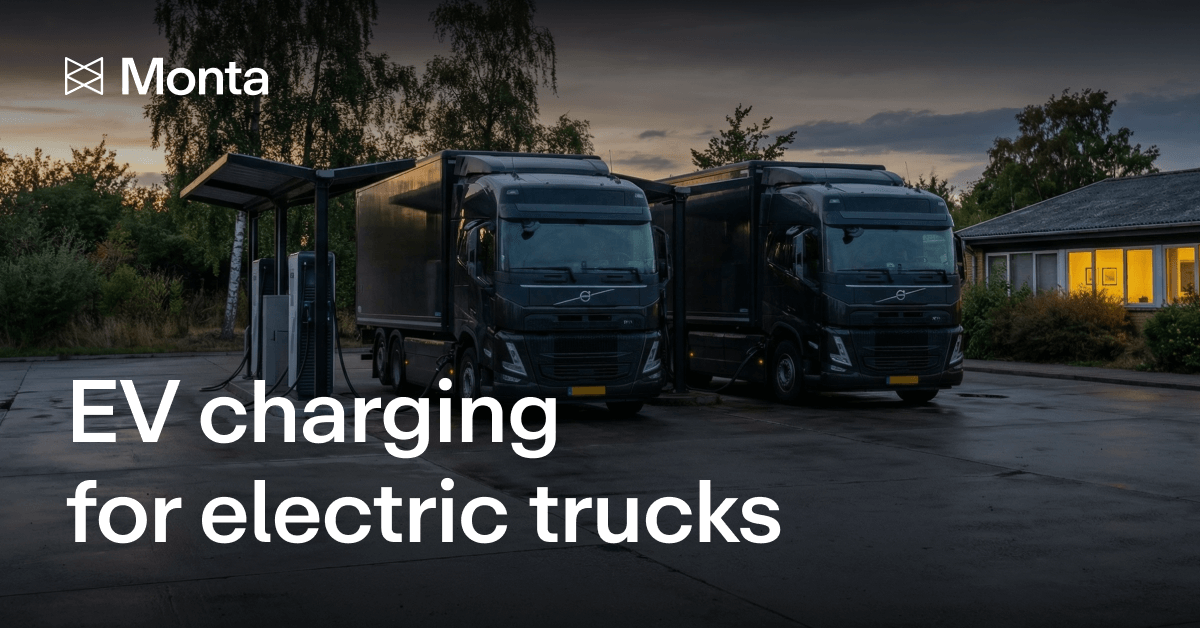
EV charging for electric trucks encompasses the infrastructure, charging types, operating models, power requirements, and cost structures needed to supply energy to medium- and heavy-duty commercial vehicles at scale. Electric truck charging supports delivery trucks, vocational fleets, and long-haul freight vehicles with significantly larger batteries and higher energy demand than passenger cars, making charging a mission-critical component of commercial operations rather than a convenience service. The system relies on coordinated interaction between high-capacity vehicle batteries, commercial-grade charging equipment, sufficient grid or on-site power supply, and centralised control software that manages timing and load. Electric truck charging is designed around predictable fleet schedules, route reliability, and uptime, using high-power DC and emerging megawatt-scale charging in depots, freight corridors, and customer sites, unlike passenger EV charging. Charging strategies prioritise operational reliability, cost control, and scalability through purpose-built infrastructure, advanced power management, and tight integration with fleet operations because trucks play a direct role in revenue generation and logistics continuity.
What is EV charging for electric trucks?
EV charging for electric trucks is the process of delivering electrical energy to the batteries of medium- and heavy-duty electric trucks using dedicated charging infrastructure designed to support commercial transport operations. Electric truck charging, truck EV charging, and EV truck charging collectively refer to systems that supply high volumes of power in controlled, scheduled, or high-throughput environments to keep commercial vehicles operational.
Electric trucks include medium-duty delivery trucks, heavy-duty freight trucks, vocational vehicles (refuse, construction, and utility trucks), and long-haul electric semi-trucks, all of which operate with larger battery packs and higher energy demands than passenger vehicles. The primary purpose of EV charging for electric trucks in commercial operations is to enable reliable freight movement, support fleet electrification, reduce emissions, and maintain operational continuity across depots, routes, and logistics networks.
Electric truck charging relies on four core elements that operate together to deliver energy reliably at a conceptual level. The system combines a high-capacity truck battery for energy storage, charging equipment that supplies power at suitable levels, an electrical power source from the grid or on-site systems, and a control or management system that regulates charging timing.
How does electric truck charging differ from passenger EV charging?
Electric truck charging differs from passenger EV charging because it involves significantly higher energy demand, much higher charging power, tightly scheduled operations, and fleet-driven usage patterns rather than individual, convenience-based charging. Electric truck charging is planned around commercial duty cycles, route reliability, and operational uptime, while passenger EV charging prioritises flexibility and personal convenience.
The differences between electric truck charging and passenger EV charging are listed below.
- Energy demand: Electric trucks require far more energy per charge due to large battery packs designed for heavy payloads and long distances, while passenger EVs draw comparatively small energy volumes per session.
- Charging power levels: Electric truck charging relies on high-power DC charging and emerging megawatt-scale systems to meet operational timelines, whereas passenger EV charging uses Level 2 AC or moderate-power DC fast charging.
- Operational context: Electric truck charging occurs within structured environments such as depots, freight corridors, and customer sites, while passenger EV charging happens at homes, workplaces, retail locations, and public stations.
- Usage patterns: Electric truck charging follows predictable fleet schedules tied to routes and shift changes, while passenger EV charging follows irregular, user-driven behaviour based on convenience and availability.
- Infrastructure scale and design: Electric truck charging infrastructure requires larger physical layouts, higher grid capacity, and specialised site design for vehicle size and manoeuvrability, unlike compact passenger EV charging installations.
- Planning and control requirements: Electric truck charging depends on centralised planning, load management, and coordination with fleet systems, while passenger EV charging operates with minimal centralised control.
Electric truck charging must be planned as a mission-critical energy system aligned with fleet operations, grid capacity, and asset utilisation rather than as a convenience amenity. Charging strategies prioritise uptime, cost control, and scalability through structured infrastructure, power management, and software coordination, reflecting the operational and economic importance of trucks within commercial transport networks.
What is electric truck charging infrastructure?
Electric truck charging infrastructure is the integrated system of physical sites, high-power charging equipment, electrical supply, and digital control layers required to reliably charge electric trucks across depot, public corridor, and customer-site environments. EV truck charging infrastructure is purpose-built to handle significantly higher power loads, larger vehicles, and more complex operational requirements than standard passenger EV charging.
Electric truck charging infrastructure includes charging sites designed for truck access, high-capacity AC and DC chargers, robust grid connections and electrical equipment, and software systems that control, monitor, and optimise charging operations. The infrastructure spans physical assets and digital layers that work together to deliver safe, predictable, and scalable charging for commercial truck fleets.
Freight operations rely on consistent uptime, dependable routes, and a large-scale energy supply, making EV charging infrastructure crucial. Depot charging supports overnight and return-to-base fleets, public corridor charging enables long-haul and regional routes, and customer-site charging supports logistics and delivery workflows, making infrastructure a foundational requirement for broad freight electrification.
Core layers of electric truck charging infrastructure (conceptual) are listed below.
- Charging sites and locations: Physical locations such as depots, logistics hubs, highway corridors, and truck stops that provide space, access, and operational alignment for truck charging.
- High-power charging equipment: AC and DC chargers designed to deliver energy at power levels suitable for medium- and heavy-duty trucks.
- Electrical supply and grid interface: Transformers, switchgear, service connections, and utility interconnections that supply sufficient and stable power.
- Energy management and control layer: Software systems that schedule charging, balance electrical loads, manage demand, and protect grid capacity.
- Monitoring, communications, and integration: Data and communication systems that connect chargers with vehicles, fleet platforms, and operational tools.
Electric truck charging infrastructure operates at a far greater scale and complexity than general EV charging infrastructure. Higher power requirements, larger physical footprints, advanced grid coordination, and tighter integration with fleet operations make EV truck charging infrastructure a specialised system designed for commercial reliability rather than consumer convenience.
What is an electric truck charging station?
An electric truck charging station is dedicated infrastructure designed to deliver electrical energy safely and reliably to charge the batteries of electric trucks, ranging from medium-duty delivery vehicles to heavy-duty and long-haul trucks. EV truck charging stations manage high power levels, coordinate energy flow, and support operational charging needs at depots, public corridors, and truck stops with EV charging, ensuring electric trucks operate within defined routes, schedules, and duty cycles.
The functions that an electric truck charging station performs at a high level are listed below.
- Deliver high-power electrical energy: Provide controlled AC or DC power to recharge large truck battery systems efficiently and safely through properly designed electric vehicle charging stations.
- Manage charging safety and protection: Regulate voltage, current, earthing, and fault detection to protect vehicles, drivers, and electrical infrastructure.
- Support operational charging workflows: Enable scheduled, opportunity, or fast charging aligned with fleet operations, driver breaks, or turnaround windows.
- Interface with vehicles and control systems: Communicate with the truck to authorise charging, adjust power levels, and confirm charging status.
Fundamental elements that define an electric truck charging station are listed below.
- Power delivery equipment: High-capacity chargers and power electronics that supply energy at levels suitable for electric trucks.
- Grid and electrical infrastructure: Transformers, switchgear, and service connections that provide sufficient electrical capacity for charging operations.
- Vehicle interface and connectors: Cables, plugs, or automated interfaces that physically connect the charger to the truck battery system.
- Control and communication systems: Hardware and software that manage charging sessions, safety protocols, and data exchange.
- Site layout and access design: Physical configuration that accommodates truck size, turning radius, and safe parking during charging.
How to find nearby electric truck charging stations
To find nearby electric truck charging stations, follow the five steps listed below.
- Use dedicated EV charging maps and apps. Access fleet-grade maps that aggregate public, semi-public, and private chargers with filters for truck-appropriate power levels, connector standards, and site access.
- Leverage fleet telematics and routing platforms. Integrate charging locations into route planning, so dispatch teams align charging stops with duty cycles and delivery windows.
- Rely on OEM vehicle navigation systems. View compatible chargers directly on electric truck dashboards, with routing based on battery state of charge and remaining range.
- Consult public corridor and freight network listings. Identify charging locations designed for trucks along major routes, emphasising highway access, pull-through layouts, and higher power delivery.
- Review utility and infrastructure provider portals. Track newly deployed truck-capable chargers published by power utilities and charging operators, linked to grid upgrades and industrial zones.
The Monta Chargepoint Map is a real-time, interactive map within the Monta Charge app that displays public and semi-public EV charge points with detailed operational data. The map allows drivers and fleet operators to filter charge points by availability, charging speed, connector type, pricing per kWh, starting method (app, card, Autocharge), and operator, making it easier to identify chargers that match specific vehicle and route requirements.
Find compatible charge points, check live availability, compare pricing, and filter by charging speed and connector type, all in one place.
Open the Monta Chargepoint Map
The criteria users should check when locating a station for electric trucks are listed below.
- Charger availability: Confirm that chargers are currently available or support queueing features so trucks do not arrive at fully occupied sites.
- Minimum charging speed: Verify that the charger power level aligns with truck battery size and turnaround requirements, especially for medium- and heavy-duty vehicles.
- Connector type: Match the connector standard to the electric truck’s inlet to avoid compatibility issues at the site.
- Pricing per kWh: Review the maximum kWh price to control charging costs, particularly for high-energy truck charging sessions.
- Starting method: Check whether charging can be initiated via app, card terminal, charge key, or Autocharge to align with fleet operating procedures.
- Operator or network: Filter by specific operators or teams to locate chargers with known access rules, support standards, or fleet agreements.
- Access conditions: Confirm whether the charge point is publicly accessible and suitable for the truck size, manoeuvring, and parking duration.
How are electric truck charging stations designed?
Electric truck charging stations are designed by aligning electrical capacity, vehicle operations, and site layout to safely deliver high-power charging while supporting fleet uptime, scalability, and cost control. The primary objective of electric truck charging station design is to ensure trucks can recharge reliably within required time windows without exceeding grid limits or disrupting fleet workflows, which places EV charging station design at the intersection of power engineering and operational planning.
The primary goals of electric truck charging station design focus on delivering sufficient power for truck batteries, maintaining predictable charging availability, minimising operational downtime, and allowing future expansion as fleets grow or duty cycles change.
The key design considerations for electric truck charging stations at a high level are listed below.
- Power availability and grid capacity: Power supply must support simultaneous high-load charging without overloading utility connections or triggering excessive demand charges, which directly affects charger selection and site feasibility.
- Vehicle mix and duty cycles: Station design must reflect truck size, battery capacity, route length, and return-to-base patterns to determine required charging speed, quantity, and scheduling flexibility.
- Charger type and power level selection: Designers select AC, DC fast, or megawatt-class chargers based on operational needs, balancing installation cost, charging time, and electrical complexity.
- Site layout and traffic flow: Physical layout must accommodate truck turning radius, trailer access, parking dwell times, and safe cable management to prevent congestion or operational delays.
- Load management and energy control systems: Smart control systems regulate charging schedules and power distribution to keep total site demand within available electrical capacity.
- Scalability and future expansion: Electrical infrastructure and conduit placement must allow additional chargers or higher power levels without requiring full site reconstruction.
Station design progresses from site assessment to operational deployment through a structured sequence. Engineers begin with site evaluation and utility coordination to confirm grid capacity, followed by charger selection and electrical design based on fleet requirements. Construction then installs power infrastructure, chargers, and control systems, after which software configuration, testing, and commissioning prepare the station for live fleet operations.
What are the types of EV charging for electric trucks?
The types of EV charging for electric trucks describe the different ways power is delivered to trucks based on charging location, power level, connection method, and operational use case. Each charging type supports a specific fleet requirement, ranging from slow, scheduled depot charging to ultra-fast corridor charging for long-haul operations, and fleets combine multiple charging types to match duty cycles, route length, and operational control.
The types of EV charging for electric trucks are listed below.
- Depot charging: Depot charging supplies electricity at a fleet’s home base, where trucks return on a predictable schedule. The charging type supports overnight or extended dwell times and provides the lowest-cost, most controllable charging for fleet operations.
- Opportunity charging: Opportunity charging delivers power during short stops throughout the day at terminals, loading docks, or designated route points. The charging type supports higher vehicle utilisation by extending range without waiting for overnight charging windows.
- Public corridor charging: Public corridor charging uses high-power chargers installed along motorways and freight corridors. The charging type supports regional and long-haul electric trucks that operate beyond a single depot and require fast turnaround during regulated breaks.
- AC charging for electric trucks: AC charging uses alternating current delivered through onboard vehicle converters and is primarily used for light-duty or smaller electric trucks with long dwell times. The charging type offers slower speeds and lower infrastructure demands.
- DC charging for electric trucks: DC charging delivers direct current straight to the battery and supports faster charging across most commercial truck segments. The charging type is essential for depot fast charging, opportunity charging, and corridor-based operations.
- Megawatt charging for heavy-duty trucks: Megawatt charging provides ultra-high-power charging designed for large battery packs in heavy-duty and long-haul electric trucks. The charging type enables rapid energy replenishment but requires advanced grid capacity and specialised infrastructure.
- Mobile and temporary charging: Mobile and temporary charging uses transportable charging systems deployed where permanent infrastructure is unavailable. The charging type supports pilot programmes, remote sites, and emergency operations, and aligns with use cases such as a mobile EV charging truck business.
Types of electric truck charging by power level
Types of electric truck charging by power level describe how much electrical power is delivered to the vehicle during charging and how that power level shapes charging speed, infrastructure demands, and fleet operations. Power level directly determines how quickly energy is added, where charging occurs, and how charging aligns with truck duty cycles.
Types of electric truck charging by power level are listed below.
- DC overnight / depot charging: DC overnight or depot charging represents lower to mid-range DC power levels used at fleet depots during long dwell periods. The charging type supports predictable return-to-base operations where trucks remain parked for many hours. Charging speed is moderate, which reduces grid stress and supports stable, scheduled fleet operations.
- DC fast charging: DC fast charging represents higher DC power levels designed to reduce charging time significantly. The charging type supports opportunity charging, multi-shift fleets, and routes requiring faster turnaround between runs. Faster charging improves vehicle availability but increases site electrical demand and infrastructure planning requirements.
- Megawatt charging (enabling ultra-high-power charging): Megawatt charging represents ultra-high-power charging systems developed for heavy-duty and long-haul electric trucks. The charging type supports rapid energy replenishment during mandated breaks or freight corridor stops. Extremely fast charging enables long-distance operations but requires advanced grid coordination, dedicated infrastructure, and careful fleet scheduling.
- Mixed power-level charging for electric truck fleets: Mixed power-level charging combines lower-power depot chargers with higher-power fast or megawatt chargers at the same or connected sites. The approach allows fleets to match charging speed to specific operational needs without overbuilding infrastructure. Fleet operations gain flexibility while controlling capital and grid capacity constraints.
Types of electric truck charging by current type
Types of electric truck charging by current type describe how electrical power is delivered to the truck battery based on whether alternating current (AC) or direct current (DC) is used. The current type determines where power conversion occurs, achievable charging speed, and how charging fits into fleet duty cycles and operations.
- AC charging for electric trucks: AC charging delivers alternating current to the truck, with onboard vehicle hardware converting AC to DC for battery storage. AC charging primarily supports overnight depot charging and return-to-base operations where long dwell times are available, and it reflects the practical use case differences explained by alternating current (AC) vs. direct current (DC) charging. Charging speed is slower, which aligns well with predictable schedules and minimises site electrical demand.
- DC charging for electric trucks: DC charging supplies direct current straight to the battery, bypassing onboard conversion and enabling much higher power delivery. DC charging supports opportunity charging, multi-shift fleets, and fast turnaround use cases at depots or public corridors. Faster charging reduces downtime but increases site power requirements and grid coordination complexity.
- High-power DC and megawatt-scale charging for electric trucks: High-power DC charging represents emerging systems designed for heavy-duty and long-haul electric trucks with very large batteries. The charging type enables rapid replenishment during mandated breaks or freight corridor stops, significantly compressing charging windows. Fleet operations gain schedule flexibility, though infrastructure planning must address extreme electrical loads and grid constraints.
- Mixed AC/DC charging for electric truck fleets: Mixed current charging combines AC chargers for long-dwell vehicles with DC chargers for time-sensitive trucks at the same site. The approach balances infrastructure cost, charging speed, and operational flexibility across diverse fleet duty cycles. Fleet operations benefit from optimised asset use without overbuilding high-power capacity.
Types of electric truck charging by connector standard
Types of electric truck charging by connector standard describe the specific physical and electrical interface used to connect an electric truck to charging equipment. Each connector standard defines supported power levels, compatibility with vehicle platforms, and how charging integrates into fleet operations.
Types of electric truck charging by connector standard are listed below.
- CCS (Combined Charging System): The Combined Charging System (CCS) is the dominant DC fast-charging connector for electric trucks in North America and Europe, supporting both AC and DC charging through a single interface. CCS serves depot charging, public corridor charging, and regional fleet operations with power levels ranging from moderate to high DC. Fleet operations benefit from broad vehicle compatibility and established infrastructure, though charging speeds are lower than emerging megawatt-scale systems.
- Megawatt Charging System (MCS): MCS is a next-generation connector designed specifically for heavy-duty electric trucks requiring extremely high power delivery. MCS supports megawatt-level charging intended for long-haul operations and fast turnaround at depots or freight corridors. Fleet operations gain significantly reduced charging time, but deployment depends on advanced grid capacity and purpose-built infrastructure.
- CHAdeMO (legacy and limited truck use): CHAdeMO is an older DC fast-charging standard with limited adoption in heavy-duty truck platforms outside specific regional or early-generation vehicles. CHAdeMO supports moderate DC charging speeds and appears mainly in legacy fleets or niche applications. Fleet scalability remains constrained due to declining infrastructure investment and limited future support.
- GB/T (China standard): GB/T is the national charging connector standard used for electric trucks deployed in China. The standard supports a wide range of power levels tailored to domestic vehicle platforms and large commercial fleets. Fleet operations benefit from standardised nationwide compatibility within China, while cross-regional interoperability remains limited.
Types of electric truck charging by connection method
Types of electric truck charging by connection method describe how electrical power physically transfers from charging equipment to an electric truck. Each method defines the interface between vehicle and charger, which affects charging speed, automation level, infrastructure complexity, and how seamlessly charging fits into fleet operations.
The types of electric truck charging by connection method are listed below.
- Plug-in charging: Plug-in charging utilises a physical cable and connector that are manually attached to the truck’s charging port. The method serves the widest range of depot, workplace, and public charging use cases and supports AC and DC fast charging with flexible power levels, while authentication can be simplified through Plug & Charge for electric vehicle capabilities on compatible vehicles and chargers. Fleet operations benefit from broad compatibility and lower infrastructure complexity, though charging requires driver action or staff involvement.
- Pantograph charging: Pantograph charging uses an overhead conductive arm that automatically connects to a vehicle-mounted contact interface when the truck parks in a designated position. The method supports high-power charging with minimal dwell time and is commonly used in bus depots and high-frequency routes. Fleet operations gain faster turnaround and automation, but infrastructure costs and site-specific alignment requirements are higher.
- Wireless (inductive) charging: Wireless charging transfers energy through electromagnetic fields between ground-installed pads and vehicle receivers without physical contact. The method prioritises convenience and automation, making it suitable for fixed-route or stop-based operations with frequent short dwell times. Charging speeds remain lower than high-power conductive systems, which limits use to specific operational patterns rather than general fleet deployment.
What are electric truck fleet charging models?
Electric truck fleet charging models are structured approaches that fleets use to decide where electric trucks charge, who owns and controls the charging infrastructure, and how charging aligns with routes, duty cycles, and operational priorities.
Electric truck fleet charging models are listed below.
- Depot charging model: Depot charging places chargers at a fleet’s home base where trucks return daily, with the fleet owning and controlling the infrastructure. The model best supports predictable routes, overnight dwell time, and strong operational control.
- Opportunity charging model: Opportunity charging uses chargers at locations trucks visit during the workday, such as loading docks or rest stops, owned by third parties. The model supports high-utilisation routes where vehicles need supplemental energy between shifts.
- Public corridor charging model: Public corridor charging relies on high-power chargers along motorways and freight corridors, owned by charging networks. The model supports long-haul and regional trucking, where vehicles do not return to a single base.
- Shared charging hub model: Shared charging hubs centralise high-capacity chargers used by multiple fleets, with ownership managed by a third-party operator. The model supports urban freight, port operations, and fleets seeking flexibility without full infrastructure ownership.
- Customer-site charging model: Customer-site charging installs chargers at shipper or receiver locations, sometimes owned by the customer or jointly managed. The model supports predictable dwell time during loading or unloading and reduces energy demand at fleet depots.
- Mobile or temporary charging model: Mobile or temporary charging uses transportable charging units deployed where permanent infrastructure is unavailable, controlled by service providers. The model supports pilot programmes, remote operations, emergency needs, and emerging use cases tied to the mobile EV charging truck business.
Fleets use different charging models to match charging strategy with vehicle duty cycles, route structure, asset ownership, and operational control requirements. Short-haul and return-to-base fleets prioritise depot control, while long-haul, variable routes, and transitional operations rely on public, shared, or mobile models to maintain flexibility and scalability.
What are the power and grid requirements for electric truck charging?
The power and grid requirements for electric truck charging are listed below.
- Charger power capacity: Charger power capacity defines the electrical output required to deliver energy at the needed speed, ranging from lower-power depot charging to high-power DC and emerging megawatt systems for heavy-duty trucks.
- Site electrical service capacity: Site electrical capacity determines whether an existing facility can support truck charging loads or requires upgrades such as new transformers, switchgear, or service connections.
- Utility interconnection and grid availability: Utility interconnection governs how much power the local grid can deliver to the site and dictates timelines, upgrade costs, and maximum simultaneous charging levels.
- Load management and peak demand control: Load management requirements address how charging demand is balanced across multiple trucks to prevent exceeding site or utility limits during peak usage periods.
- Redundancy and reliability requirements: Reliability requirements ensure charging availability through backup systems, redundancy planning, and fault tolerance to protect fleet operations from outages.
- Future scalability planning: Scalability requirements account for anticipated fleet growth by designing electrical infrastructure that can expand without repeated major grid or construction work.
How much power do electric truck chargers require?
Electric truck chargers require a wide range of electrical power levels, spanning from lower-power AC charging for overnight depot use to very high-power DC and emerging megawatt systems for rapid turnaround, depending on truck size, battery capacity, duty cycle, and operational timing requirements.
Typical charger power ranges for electric trucks are listed below.
- Low-power AC charging (single-digit to low-tens of kW): Lower-power AC charging supports overnight or long-dwell depot scenarios where trucks return to base and remain parked for extended periods.
- Medium-power DC charging (tens of kW range): Medium-power DC charging serves regional or multi-shift operations where trucks require faster replenishment than AC charging but do not require ultra-rapid turnaround.
- High-power DC fast charging (hundreds of kW): High-power DC charging supports fast turnaround at depots, logistics hubs, or public corridors where trucks must quickly return to service.
- Ultra-high-power and megawatt charging (high hundreds of kW to megawatt scale): Megawatt-class charging targets heavy-duty and long-haul electric trucks that require rapid energy transfer during short dwell windows.
Higher charger power levels shorten charging time but significantly increase site electrical demand, grid coordination requirements, and infrastructure complexity. Lower-power charging extends charging duration but reduces peak load, supports simpler electrical designs, and allows fleets to schedule charging around predictable downtime rather than operational urgency.
What grid capacity challenges affect electric truck charging?
The grid capacity challenges that affect electric truck charging are listed below.
- Limited utility service capacity: Existing grid connections at depots or logistics sites are unable to support high-power truck chargers, delaying deployment or forcing costly upgrades.
- Transformer and substation constraints: Local transformers or substations may lack the headroom for simultaneous high-load charging, restricting the number of trucks that can charge at once.
- High peak demand exposure: Fast or concurrent charging can spike demand, triggering demand charges or grid penalties that raise operating costs and complicate operations.
- Long utility upgrade timelines: Grid reinforcements such as new transformers or feeder lines can take months or years, slowing fleet electrification schedules.
- Grid congestion and reliability risks: In constrained or heavily loaded areas, adding truck charging increases the risk of voltage drops or outages that disrupt charging reliability.
How smart energy management mitigates grid constraints
Smart energy management mitigates grid constraints by using software-driven control and optimisation to align electric truck charging demand with available electrical capacity, rather than drawing maximum power at all times. The smart EV energy management system reduces peak loads, defers or avoids grid upgrades, stabilises site power use, and enables scalable charging even on constrained electrical connections by actively coordinating when and how trucks charge.
The primary ways smart energy management helps mitigate grid constraints for electric truck charging are listed below.
- Load balancing across chargers: Charging power is dynamically shared among trucks to stay within site or utility limits, preventing overloads on constrained connections.
- Scheduled and staggered charging: Charging sessions are timed around departure needs and off-peak periods, reducing peak demand stress on the grid.
- Peak demand management: Software caps or throttles charging during high-load periods to control demand charges and avoid grid penalties.
- Integration with on-site energy assets: Coordination with solar, batteries, or generators supplements grid power and smooths load during high-demand windows.
- Utility and grid signal response: Charging behaviour adapts to utility signals or tariffs, supporting grid stability while maintaining fleet readiness.
What are the key hardware and software components of electric truck charging?
The key hardware and software components of electric truck charging are the physical power delivery equipment and the digital control systems that together enable safe, reliable, and scalable charging for heavy-duty vehicles. Hardware components include high-power DC chargers, charging dispensers and connectors, transformers, switchgear, distribution panels, cabling, and site infrastructure designed to handle large battery capacities and high electrical loads. Software components sit on top of the infrastructure and manage charging operations through scheduling, load balancing, monitoring, billing, diagnostics, and integration with fleet and energy systems. The hardware and software layers ensure that electric trucks receive the required energy within operational constraints while controlling costs, maintaining uptime, and supporting fleet electrification at scale.
Electric truck charger hardware and site architecture
The electric truck charger hardware and site architecture are listed below.
- High-power charging units (DC fast chargers): These chargers convert grid AC power into DC electricity and deliver it directly to truck batteries at high power levels. They are critical for reducing dwell time and supporting large battery packs used in electric trucks.
- Charging dispensers and cables: Dispensers house connectors, cables, and user interfaces that physically connect trucks to the charging system. Heavy-duty rated cables and connectors are essential for safety, durability, and consistent performance under high current loads.
- Electrical service entrance and transformers: The infrastructure steps utility power down to usable voltage levels for charging equipment. Adequate transformer capacity is critical to support simultaneous charging without voltage drops or service interruptions.
- Switchgear and distribution panels: Switchgear manages power flow, protection, and isolation across chargers and site equipment. These components ensure safe operation, fault protection, and scalable expansion as charging demand grows.
- Conduit, trenching, and cable infrastructure: Underground or surface-mounted conduit routes power and data cables between equipment. Proper site layout and construction reduce installation risk, improve reliability, and simplify future upgrades.
- Parking layout and vehicle flow design: Site geometry defines how trucks enter, park, and exit charging stalls. Well-designed layouts support large turning radii, trailer access, and efficient throughput without operational bottlenecks.
- Cooling and thermal management systems: Some high-power chargers require active cooling to manage the heat generated during fast charging. Thermal control protects equipment lifespan and maintains consistent charging performance.
- Safety and compliance systems: Earthing, emergency shutoffs, signage, and protective barriers reduce electrical and physical hazards. These systems are essential for regulatory compliance and safe operation in active fleet environments.
- Communications and networking hardware: Routers, gateways, and control units connect chargers to management platforms and grid systems. Reliable communications enable monitoring, diagnostics, and coordinated charging at scale.
Charging management software and energy systems
The charging management software and energy systems are listed below.
- EV charging management software platforms: EV charging management software, such as Monta, provides centralised control over charger access, scheduling, monitoring, and reporting. The software layer improves uptime, cost control, and scalability by coordinating charging sessions across vehicles, depots, and public sites.
- Load and power management systems: These systems dynamically allocate available electrical capacity across multiple chargers to prevent overloads and reduce peak demand. They improve operational reliability by ensuring all trucks receive sufficient charge without triggering costly grid penalties.
- Fleet and route management integration: Charging systems integrate with fleet telematics and route planning tools to align charging schedules with vehicle availability and departure times. The coordination improves efficiency by prioritising critical vehicles and minimising idle or missed charging windows.
- Energy monitoring and metering systems: Advanced metering tracks real-time energy use at the charger and site level. The visibility supports accurate cost allocation, performance analysis, and compliance with utility or regulatory requirements.
- On-site energy storage systems: Battery storage absorbs excess energy during low-demand periods and releases it during peak charging events. It improves grid alignment and reduces demand charges while supporting high-power truck charging.
- Renewable energy integration: Solar or other on-site generation systems supply clean energy directly to chargers or storage assets. The integration lowers operating costs and supports sustainability targets without compromising charging availability.
- Utility and grid communication interfaces: Grid-facing systems enable communication with utilities for demand response or capacity coordination. These interfaces help fleets align charging behaviour with grid constraints and future infrastructure planning.
How does electric truck charging work in practice?
Electric truck charging works in practice through the nine steps listed below.
- Charger selection and scheduling. A driver or fleet management system selects the appropriate AC or DC charger based on route plans, dwell time, and battery state. The step is automated at depots using scheduling or load-management software.
- Vehicle arrival and positioning. The driver parks the truck in a designated charging bay, or an automated yard system directs the vehicle to an assigned charger. Proper positioning enables safe cable reach and efficient charger utilisation.
- Physical connection. The driver connects the charging cable, or a depot system enables a pre-assigned connector. The process establishes the physical link required for communication and power transfer.
- Authentication and session initiation. The charging session is started by the driver using an RFID card or app, or automatically by a fleet system at managed depots. Authorisation confirms vehicle identity, access rights, and applicable charging rules.
- System handshake and safety validation. The charger and truck exchange data to confirm voltage, current limits, and battery conditions. Charging only begins once onboard vehicle systems and charger controls verify all safety requirements.
- Managed power delivery. Electricity flows to the battery under continuous control by the charger and the truck’s battery management system. Fleet or site software may dynamically adjust power levels to manage demand and prioritise vehicles.
- Charging, monitoring, and optimisation. Charging performance is monitored in real time by onboard systems and fleet platforms. Adjustments occur automatically to account for battery temperature, grid conditions, or scheduled departure times.
- Automatic or scheduled session completion. Charging stops when the target state of charge is reached or when a scheduled cutoff occurs. The step is handled automatically by the vehicle or fleet management system.
- Disconnection and return to service. The driver or site staff disconnects the cable once charging is complete. The truck is released for its next route with the required range available for operation.
How do you charge an electric truck?
Charge an electric truck by following the eight steps listed below.
- Select the appropriate charger. The driver or fleet operator chooses an AC or DC charger based on available time, battery size, and route requirements. It determines the maximum charging speed and how long the vehicle will remain connected.
- Position and secure the truck. The truck is parked within reach of the charging cable, and the parking brake is engaged. Proper positioning ensures a safe connection and prevents strain on the connector.
- Connect the charging cable. The charging connector is plugged into the truck’s inlet until it locks in place. It establishes a physical and electrical link between the charger and the vehicle.
- Authenticate and start the session. The charging session is initiated using a fleet card, mobile app, RFID badge, or automated depot system. The charger and truck communicate to verify compatibility and authorise power flow.
- Vehicle and charger perform safety checks. The charger and truck exchange data to confirm voltage, current limits, and battery condition. Charging only begins once all safety parameters are met.
- Energy is delivered to the battery. Electricity flows from the charger to the battery at a controlled rate set by the charger and the truck’s onboard systems. Charging speed adjusts dynamically based on battery temperature and state of charge.
- Charging slows or stops automatically. Power delivery tapers as the battery approaches higher charge levels or stops at a preset limit. The process protects battery health and ensures efficient energy use.
- End the session and disconnect. The charging session is stopped manually or automatically, and the connector is safely removed. The truck is then ready to return to service with sufficient range for its next operation.
How long does it take to charge an electric truck?
Charging time for an electric truck depends primarily on battery size, charger power, and the vehicle’s maximum charge acceptance rate, with larger batteries and lower-power chargers requiring longer sessions. Slower charging is suited to long dwell times at depots or workplaces as a general rule, while faster DC charging supports tighter operational schedules and en-route refuelling needs.
- Home or workplace AC charging (7–11 kW): Requires about 10–25+ hours for large battery packs in the 100–300 kWh range, making it suitable for overnight or extended downtime charging.
- Public DC charging at 50 kW: Delivers a 10–80% charge in roughly 2–6 hours, supporting medium-duty and regional use cases.
- Fast DC charging at 150 kW: Recharge most trucks from 10–80% in about 45–120 minutes, depending on battery size and thermal conditions.
- High-power DC charging at 250–350 kW: Reduce charging time to 30–90 minutes (10–80%), if the truck is designed to accept that power level.
- Megawatt Charging System (MCS): Emerging for heavy-duty trucks, targets approximately 20–45 minutes (10–80%), enabling future long-haul electrification.
Charging speed tapers after about 80% state of charge to protect battery health, while cold weather and auxiliary loads such as cabin heating can extend charging time. Actual performance is likely to be limited by the truck’s onboard charging system, even when higher-power chargers are available.
How do electric truck charging requirements differ by truck segment?
Electric truck charging requirements differ by truck segment based on vehicle size, duty cycle, route length, and operating patterns, which determine how fast, where, and how often trucks must charge to remain operational.
- Last-mile and urban delivery trucks: These trucks operate on short, predictable routes with daily return-to-base patterns and relatively low daily mileage. Charging is handled through overnight depot charging using lower-power AC or modest DC chargers where timing flexibility is high.
- Regional and medium-duty fleets: Regional trucks cover moderate distances with fixed or semi-fixed routes and return to a depot within one or two shifts. Charging requires a mix of overnight depot charging and faster DC charging to support tighter turnaround windows and higher daily energy needs.
- Long-haul and electric semi trucks: Long-haul trucks operate continuously over extended distances with limited dwell time and may not return to a home depot daily. Charging depends on high-power DC fast charging at freight corridors, hubs, or strategically located depots where speed and availability are critical.
What are the business cost considerations for electric truck charging?
The business cost considerations for electric truck charging are listed below.
- Charging equipment and installation costs: The category includes the cost of high-power chargers, civil works, cabling, and site preparation required to support heavy-duty vehicles, all of which contribute to overall EV charging station infrastructure costs. These upfront investments directly affect capital planning and determine how quickly fleets can scale charging capacity.
- Electrical upgrades and utility interconnection: Upgrades such as new transformers, switchgear, service connections, and utility interconnection fees are required for truck-scale charging. These costs are high and become the primary constraint on deployment timelines and site selection.
- Energy and demand-related operating costs: Electricity consumption, time-of-use pricing, and demand charges affect the long-term operating costs of electric trucks. Poorly managed charging can increase peak-demand costs and erode the fuel savings that support the economics of fleet electrification.
- Software, networking, and system integration: Charging management software, networking fees, and integration with fleet, telematics, and energy systems add recurring operational costs. These investments matter because they enable load management, cost control, and scalable multi-site operations.
- Maintenance, reliability, and downtime impacts: Ongoing maintenance, hardware failures, and charger downtime can disrupt fleet operations and reduce asset utilisation. Reliable infrastructure lowers the total cost of ownership by minimising lost productivity and unplanned service expenses.
What are the key challenges to scaling electric truck charging?
The key challenges to scaling electric truck charging are listed below.
- Grid readiness and utility coordination: Limited grid capacity and slow utility upgrade timelines restrict how quickly high-power truck chargers can be deployed, especially at depots and freight hubs. Delays in transformer upgrades and interconnection approvals slow expansion and increase project risk.
- High upfront infrastructure complexity: Electric truck charging requires large electrical upgrades, high-power equipment, and site redesigns that increase cost and technical complexity. It raises barriers to entry and limits how fast fleets can scale beyond pilot projects.
- Long planning and permitting timelines: Permitting, environmental reviews, and utility studies take months or years, delaying charger deployment. These timelines slow fleet electrification and make it difficult to align infrastructure delivery with vehicle procurement.
- Operational integration with fleet workflows: Charging schedules must align with routes, dwell times, and shift patterns, which adds operational constraints. Poor integration can reduce vehicle availability and limit the effective scale of electric truck operations.
- Interoperability and standardisation gaps: Differences in charger standards, software platforms, and vehicle requirements complicate multi-site and multi-vendor deployments. These gaps reduce reliability, increase integration costs, and slow network-wide scaling of truck electrification.
What is the role of EV charging management software in electric truck charging?
The role of EV charging management software in electric truck charging is to act as the digital control layer that coordinates, optimises, monitors, and integrates charging operations across depots, public networks, and fleet systems. EV management software ensures reliable uptime, controls energy costs, and scales infrastructure as truck fleets electrify, with platforms such as Monta EV charging management software supporting centralised control and optimisation at scale.
Primary roles of EV charging management software in electric truck charging are listed below.
- Charging control and scheduling: Software controls when and how trucks charge by sequencing sessions based on vehicle priority, departure times, and charger availability, preventing congestion and ensuring operational readiness.
- Load management and energy optimisation: Intelligent load balancing adjusts charging power in real time to avoid peak-demand spikes, reducing electricity costs and minimising the need for costly grid upgrades.
- Fleet visibility and performance monitoring: Centralised dashboards provide real-time insight into charger status, energy use, and vehicle state of charge, improving uptime and enabling faster fault response through EV charging management software.
- Cost tracking and billing management: Software tracks energy consumption by vehicle, route, or depot and applies pricing or cost allocation rules, which support accurate budgeting, internal chargebacks, and financial control.
- Scalability and infrastructure planning: Charging management platforms enable fleets to add vehicles and chargers without disrupting operations, which supports phased expansion and long-term electrification strategies.
- System integration and automation: Integration with fleet management, telematics, utilities, and energy markets enables automated decision-making, improving operational efficiency and reducing manual oversight.
- Reliability, compliance, and security: Continuous monitoring, alerts, and reporting support regulatory compliance and cybersecurity standards, which protect assets and ensure dependable charging operations.
What are the future trends in electric truck charging?
The future trends in electric truck charging are listed below.
- Higher-power and faster charging technologies: Charging systems above 350 kW are emerging to reduce dwell time for heavy-duty trucks, which matters because faster turnaround directly improves route utilisation and accelerates fleet-scale truck electrification.
- Standardisation and interoperability improvements: Industry alignment around connectors, protocols, and payment systems is increasing, which matters because standardisation lowers infrastructure risk and enables trucks to charge seamlessly across different networks.
- Expansion of public and freight-corridor charging networks: Governments and private operators are building high-capacity charging hubs along motorways and logistics corridors, which matters because long-haul and regional fleets require reliable en-route charging to scale adoption.
- Increased use of smart energy and software-driven optimisation: Advanced load management, dynamic scheduling, and energy optimisation software are becoming standard, which matters because fleets can charge more vehicles without costly grid upgrades while controlling demand charges.
- Integration with renewable energy and on-site storage: Depots increasingly pair chargers with solar, battery storage, and microgrids, which is important because it reduces energy costs, improves resilience, and supports sustainability targets.
- Growing availability of grants, incentives, and public funding programmes: Public funding for charging infrastructure and grid upgrades continues to expand, which matters because incentives reduce upfront capital barriers and make large-scale electric truck deployments financially viable.