
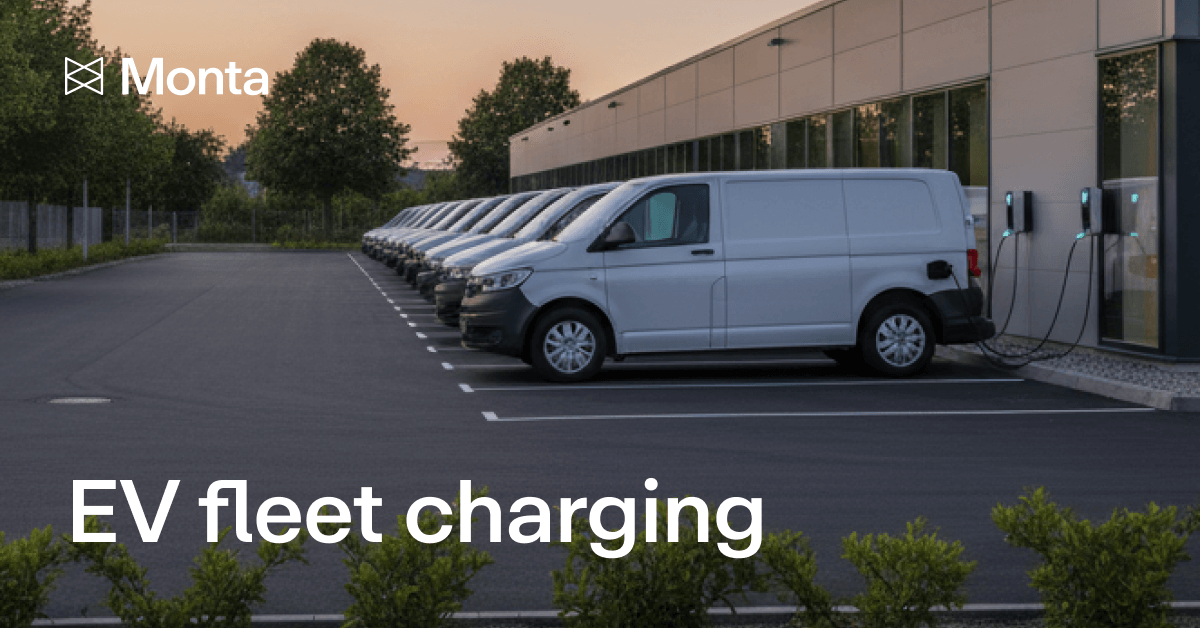
EV fleet charging refers to the coordinated process of supplying electricity to multiple electric vehicles used for commercial, municipal, and service operations through dedicated depot and workplace infrastructure. EV fleet charging enables delivery companies, transit agencies, utility providers, and corporate operators to maintain vehicle availability through structured overnight and scheduled charging cycles. Charging EV fleet assets requires integrated electrical systems, load management platforms, and operational planning to control energy costs and prevent downtime. Electric vehicle fleet charging functions as a critical foundation of fleet electrification because reliable access to power determines route coverage, service continuity, and asset utilisation. Fleet operators are unable to sustain electric vehicle deployment at a commercial scale or achieve long-term operational efficiency without scalable, well-managed charging systems.
What is EV fleet charging?
EV fleet charging is the structured provision of electrical power to groups of electric vehicles operated by commercial, municipal, and institutional organisations through dedicated depot, workplace, and operational charging systems. Fleet operators install managed charging infrastructure at central locations to support delivery fleets, public transit buses, rideshare vehicles, utility service vehicles, and corporate cars according to fixed schedules and operational requirements.
EV fleet charging differs from residential and public charging in that it prioritises coordinated scheduling, controlled access, load management, and predictable vehicle availability, rather than individual convenience or open public use. Residential EV charging focuses on single households with private electrical service, while public charging serves transient drivers through pay-per-use stations. Fleet charging functions as an internal energy system designed to maintain operational continuity, minimise downtime, and optimise electricity costs across multiple vehicles.
What is EV fleet charging infrastructure?
EV fleet charging infrastructure refers to the integrated network of physical, electrical, and digital systems installed at depots, workplaces, and operating bases to supply electricity to electric vehicles used in commercial, municipal, and service fleets. The EV charging infrastructure includes charging stations, power distribution equipment, transformers, cabling networks, switchgear, protection devices, and load management platforms designed to support simultaneous vehicle charging under controlled conditions.
Power distribution panels route electricity from utility service connections to individual charge points, while transformers regulate voltage and expand site capacity. Heavy-duty cabling and conduit systems deliver power safely across parking areas and maintenance zones. Switchgear and protection equipment isolate faults, manage load flow, and protect vehicles and facilities from electrical hazards. Charging stations convert grid power into vehicle-compatible energy, while control systems balance demand and coordinate charging schedules. The components form a resilient energy system that maintains fleet availability, controls operating costs, and supports long-term electrification.
What are the charge point types used for EV fleets?
The charge point types used for EV fleets are listed below.
- AC charge points: AC charge points deliver moderate AC power and suit fleets with long overnight or full-day vehicle downtime, low daily mileage, and predictable return schedules. Service fleets, municipal vehicles, and corporate cars rely on the charge point type to minimise infrastructure cost while maintaining consistent readiness.
- DC fast charge points (DCFC): DC fast charge points provide high-power direct current for rapid vehicle turnaround in fleets with high daily mileage, multi-shift operations, and limited idle time. Taxi services, delivery fleets, and emergency operators rely on DCFC to maintain availability when slow charging limits productivity.
- Megawatt charging for heavy-duty fleets: Megawatt charging systems deliver ultra-high power to trucks, buses, and industrial vehicles with large battery packs and continuous duty cycles. Logistics operators and transit agencies select the charge point type when route length, payload demand, and scheduling constraints require minimal charging downtime.
1. AC charge points
AC charge points deliver alternating current power through onboard vehicle converters and remain the primary charging solution for fleets with predictable schedules and long vehicle downtime. Fleet operators deploy AC charge points in depots where vans, service vehicles, and passenger cars remain parked overnight or for extended periods. The charging type suits smaller fleets and operations with low daily mileage because it aligns with eight to twelve hours of idle time. AC charge points support battery capacities between 40 kWh and 80 kWh and prioritise low installation cost, stable grid integration, and routine overnight replenishment.
2. DC fast charge points (DCFC)
DC fast charge points supply direct current to vehicle batteries, enabling rapid energy transfer and short turnaround times. Fleet managers adopt DC fast charge points (DCFC) systems for high-mileage vehicles, multi-shift operations, and time-sensitive services where extended downtime disrupts productivity. The charging type supports quick turnaround for taxis, delivery fleets, emergency services, and shared mobility vehicles. DC fast charge points commonly operate between 50 kW and 350 kW and enable large passenger vehicle batteries between 70 kWh and 120 kWh to recharge within one to two hours.
3. Megawatt charging for heavy-duty fleets
Megawatt charging systems deliver ultra-high-power direct current designed for electric trucks, buses, and heavy-duty commercial vehicles with very large battery packs. Logistics operators and transit agencies deploy megawatt charging for heavy-duty fleets where long-haul routes, continuous duty cycles, and high payload requirements demand minimal downtime. The charging category supports battery capacities exceeding 300 kWh and reduces charging time from many hours to under one hour in high-power installations. Megawatt charging plays a critical role in fast charging large batteries and maintaining operational continuity for freight, public transport, and industrial fleets.
What equipment is needed for fleet charging infrastructure?
The equipment needed for fleet charging infrastructure is listed below.
- Charging stations and connectors: Fleet charging infrastructure relies on AC charge points and, where required, DC fast charge points equipped with industry-standard connectors to deliver controlled electrical power to vehicles.
- Power distribution panels and switchgear: Electrical distribution panels and switchgear route electricity from utility service lines to charging equipment while providing circuit protection and isolation for safe operation.
- Transformers and utility service equipment: Transformers and service entrance equipment regulate incoming voltage and increase site capacity to support simultaneous vehicle charging.
- Load management and control systems: Energy management controllers and software platforms balance power across multiple charge points to prevent overload and reduce demand charges.
- Sub-metering and energy monitoring devices: Metering equipment measures electricity consumption for charge points, vehicles, or departments to support cost allocation and performance tracking.
- Network and communication hardware: Routers, gateways, and wired or wireless communication devices connect charge points to central management platforms for monitoring and scheduling.
- Cabling, conduit, and mounting systems: Heavy-duty cables, conduit, and mounting structures deliver power safely while protecting electrical components from physical damage.
- Grounding and electrical protection systems: Grounding rods, surge protectors, and fault detection devices prevent electrical hazards and protect equipment from voltage irregularities.
- Safety and compliance equipment: Emergency shut-off switches, fire suppression interfaces, ventilation systems, and warning signage support regulatory compliance and operational safety.
- Maintenance and diagnostic tools: Testing instruments, firmware update tools, and remote diagnostics platforms support routine inspection and rapid fault resolution.
What software is used for fleet charging management?
The software used for fleet charging management is a specialised energy and fleet software platform, such as Monta, which controls charge point access, schedules charging sessions, balances electrical load, monitors vehicle readiness, manages billing, and integrates with telematics systems. The fleet charging management platform coordinates charging based on vehicle departure times, battery state, site power limits, and electricity tariffs through integration with EV fleet management platforms. It reduces demand charges, prevents electrical overload, and maintains continuous fleet availability across single or multi-site depots.
How much does fleet charging cost?
Fleet charging typically costs £6,000 to £15,000 per vehicle ($7,500 to $19,000, €7,000 to €17,500) for fully installed AC depot charging, including equipment, installation, electrical upgrades, and basic load management systems. A small fleet of 20 vehicles requires an investment of £120,000 to £300,000 ($150,000 to $380,000, €140,000 to €350,000), depending on site conditions and available electrical capacity.
Fleets that require DC fast charging for rapid turnaround should budget £120,000 to £300,000 per charge point ($150,000 to $380,000, €140,000 to €350,000), with additional costs for transformer upgrades, switchgear, and utility interconnection. Large depots with 50 to 100 vehicles frequently invest £350,000 to £900,000 ($440,000 to $1,140,000, €410,000 to €1,050,000) to support scalable charging, demand management, and future fleet growth.
How many charge points do I need for a fleet?
A fleet typically needs one charge point for every 1.5 vehicles, which means 20 charge points for a 30-vehicle fleet, 40 charge points for a 60-vehicle fleet, and 67 charge points for a 100-vehicle fleet when vehicles return daily and charge overnight under managed scheduling. The ratio supports full overnight charging within eight to twelve hours using AC or moderate-power AC systems while allowing staggered use through load management software. Fleets operating multiple shifts or requiring daytime turnaround should increase capacity to one charge point per vehicle, while fleets with long idle periods and advanced scheduling systems can operate reliably at one charge point per two vehicles.
Do fleets need DC fast charge points?
No. Most fleets do not need DC fast charge points because predictable return schedules and extended depot dwell times allow vehicles to recharge fully through overnight AC or moderate-power AC systems. Delivery vans, service vehicles, municipal fleets, and corporate cars typically park for eight to twelve hours, which supports complete charging without high-power equipment.
DC fast charge points become necessary only for fleets with continuous operations, multi-shift schedules, high daily mileage, or limited parking windows. Taxi fleets, ride-hailing operators, emergency services, and long-haul logistics providers require rapid turnaround to maintain service availability. Managed overnight charging combined with limited opportunistic charging provides the most cost-effective and operationally efficient solution for most fleets.
What is the best charging strategy for fleets?
The best charging strategy for fleets is a managed overnight and scheduled charging model supported by smart charging software, demand charge control, and optional renewable energy integration, tailored to vehicle duty cycles and electricity pricing structures. Most fleets prioritise overnight charging at depots using AC or moderate-power DC charge points because long dwell periods allow full battery replenishment at lower off-peak tariffs. Fleets with variable routes and high daily mileage supplement overnight charging with opportunistic daytime charging at depots or strategic locations to maintain operational flexibility.
Smart charging and scheduling systems coordinate charging start times, power levels, and vehicle priorities based on departure schedules and state of charge, preventing grid overload and ensuring fleet readiness. Demand charge management limits simultaneous high-power charging through load balancing and peak shaving, reducing utility penalties and stabilising operating costs. Renewable energy and storage systems further optimise fleet charging by using on-site solar generation and battery storage to offset grid consumption, lower peak demand, and improve energy resilience. The optimal strategy depends on fleet size, vehicle utilisation patterns, turnaround requirements, site electrical capacity, and local electricity tariffs, which requires coordinated planning between operations, energy management, and financial teams.
Can fleet charging reduce demand charges?
Yes. Fleet charging can reduce demand charges when operators use managed charging, load balancing, and scheduling systems to control peak electricity usage. Demand charges are triggered when multiple vehicles simultaneously charge at high power, raising the facility’s maximum monthly load. Smart charging platforms sequence charging sessions, limit total site power, and prioritise vehicles based on departure times and route requirements. The process control prevents sudden demand spikes, keeps peak load within contracted limits, and lowers utility penalties. Fleets that combine managed charging with off-peak tariffs and, where appropriate, on-site battery storage achieve the greatest reduction in long-term demand-related energy costs.
Is peak shaving needed for fleet charging?
Yes. Peak shaving is needed for most fleet charging operations because simultaneous vehicle charging creates high demand spikes that increase electricity costs and strain the site’s electrical infrastructure. Fleet depots often charge multiple vehicles during limited overnight or turnaround windows, which concentrates power use into short periods and triggers demand charges from utilities.
Peak shaving systems use load management software, battery storage, and controlled charging schedules to distribute power more evenly across available time slots. The approach reduces peak demand fees, delays costly transformer and panel upgrades, and improves long-term operating cost stability. Fleet operators implementing peak shaving achieve lower total energy expenses and greater charging reliability as fleet size expands.
How to choose the best EV fleet charging solution
To choose the best EV fleet charging solution, follow the 10 steps listed below.
- Assess fleet size and vehicle profiles. Fleet managers analyse vehicle counts, battery capacities, daily mileage, and return schedules to determine realistic charging demand.
- Evaluate the site’s electrical capacity. Engineering teams review panel ratings, transformer limits, feeder capacity, and utility connection terms to identify available power and upgrade requirements.
- Define charging speed requirements. Operations planners determine whether overnight AC charging, DC fast charging, or a mixed approach best supports route schedules and turnaround times.
- Conduct a detailed site assessment. Technical surveys examine parking layout, cable routing, drainage, ventilation, safety compliance, and construction constraints that affect installation.
- Select the scalable infrastructure architecture. Decision-makers prioritise modular charge points, spare conduit, and expandable load management systems to support future fleet growth.
- Compare the total cost of ownership. Procurement teams evaluate equipment costs, installation expenses, energy tariffs, maintenance fees, software subscriptions, and upgrade risk over the system’s lifespan.
- Review load management and smart charging features. Technology specialists verify that platforms support power sharing, demand control, and scheduling based on operational priorities.
- Check software and system integration. IT teams confirm compatibility with fleet management, telematics, and billing platforms.
- Assess reliability and service support. Operators review warranty terms, service-level agreements, response times, and parts availability.
- Plan for future expansion and regulation. Strategic planners account for projected EV adoption, growth in battery size, regulatory requirements, and utility programme participation before final selection.
What are fleet EV charging services?
The fleet EV charging services are listed below.
- Charging infrastructure design and deployment: Service providers plan, engineer, and install depot, workplace, and on-route charging systems aligned with fleet size, vehicle type, and operational schedules.
- Electrical capacity assessment and upgrades: Specialists evaluate panels, transformers, feeders, and utility connections and coordinate required upgrades to support fleet charging demand.
- Managed charging and load balancing: Software platforms regulate charging schedules, distribute available power, and limit peak demand to control energy costs and protect site stability.
- Fleet charging software and monitoring: Digital systems track vehicle charging status, energy consumption, charge point uptime, and performance metrics across multiple locations.
- Access control and authentication services: Platforms manage driver identification, vehicle assignment, and secure charge point access for authorised fleet users.
- Billing and energy cost management: Services allocate electricity costs to vehicles, departments, or routes and integrate charging data with financial systems.
- Maintenance and technical support: Providers deliver preventative maintenance, remote diagnostics, firmware updates, and rapid fault resolution.
- Utility coordination and permitting support: Service teams manage interconnection approvals, permitting processes, and regulatory compliance requirements.
- Scalability and expansion planning: Consultants design systems with spare capacity, modular hardware, and phased rollout strategies to support fleet growth.
- Renewable energy and storage integration: Advanced EV charging services integrate solar generation, battery storage, and smart tariffs to reduce operating costs and carbon intensity.
What are the challenges of EV fleet charging?
The challenges of EV fleet charging are listed below.
- Electrical capacity limitations: Fleet depots often have limited panel, transformer, and feeder capacity, which cannot support simultaneous high-power charging without costly upgrades.
- High upfront infrastructure costs: Charging equipment, civil works, grid connections, and electrical reinforcement require significant capital investment before operational benefits appear.
- Space and layout constraints: Depot layouts, parking geometry, and vehicle circulation patterns limit optimal charge point placement and reduce the flexibility of charging bays.
- Complex charging schedules: Multiple shift patterns, variable return times, and varying route lengths complicate charging coordination across the fleet.
- Peak demand and utility charges: Unmanaged simultaneous charging increases peak load, triggering demand charges and raising operating costs.
- Operational downtime risk: Charge point faults, grid outages, or software failures directly affect vehicle availability and service delivery.
- Integration with fleet management systems: Charging platforms must connect with maintenance, and telematics systems, which increases technical complexity.
- Scalability and future growth pressure: Initial installations often become undersized as fleets expand and battery capacities increase.
- Maintenance and reliability requirements: High-utilisation charge points require frequent inspection, firmware updates, and component replacement.
- Regulatory and permitting complexity: Utility approvals, local permitting, and safety compliance extend project timelines and increase administrative burden.
Fleet operators address EV charging challenges through coordinated electrical planning, phased infrastructure deployment, and intelligent energy management systems. Load management platforms sequence charging activity to stay within site capacity and reduce demand charges. Modular infrastructure design enables operators to gradually expand capacity as their fleets grow. Integrated software platforms connect charging data with maintenance systems to optimise scheduling and prevent downtime. Early utility coordination, detailed site assessments, and redundancy planning reduce upgrade risk and improve long-term operational resilience.