
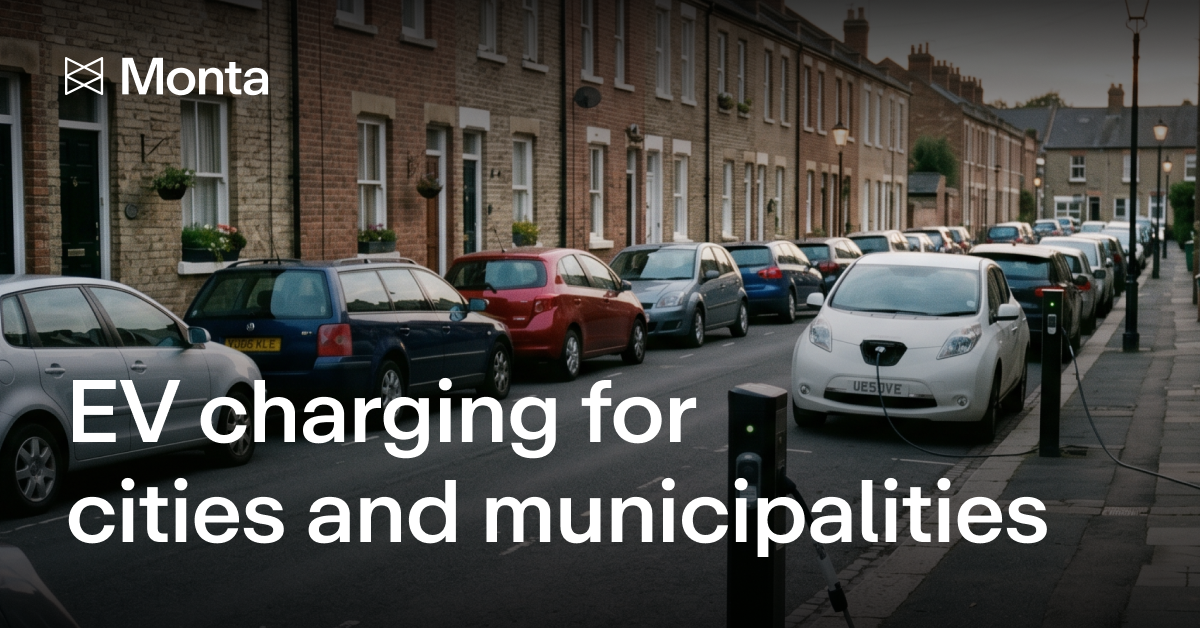
EV charging for cities and municipalities involves the strategic planning, deployment, and management of electric vehicle infrastructure within public and government-managed spaces. Local authorities prioritise the systems to support residents, commercial fleets, public transit, and visitors. The initiatives drive a significant transition to electric mobility in urban environments. Government-led projects focus on accessibility and equitable distribution across metropolitan areas. Sustainable transportation goals drive the expansion of power points in residential and commercial districts. Professional management platforms like Monta EV charging streamline the operation of these diverse networks. Every installation follows strict safety and accessibility standards to protect the community. Public hubs encourage the phase-out of fossil fuel vehicles in favour of cleaner alternatives.
What is EV charging for cities and municipalities?
EV charging for cities and municipalities is publicly accessible charging infrastructure managed or supported by local governments. The systems play a fundamental role in large-scale urban electrification efforts. Municipalities provide the necessary space and permits for private- and public-sector collaboration. City-wide networks bridge the gap for residents without access to private off-street parking. Local policies often mandate the inclusion of charging points in new development projects. Publicly funded charging stations serve as a catalyst for widespread electric vehicle adoption among the general public.
How does public EV charging infrastructure work in cities and municipalities?
Public EV charging infrastructure in cities and municipalities is implemented by integrating hardware into existing car parks, streets, and public facilities. Local governments coordinate with utility providers to ensure sufficient grid capacity at every site. Network operators manage the software backend to facilitate user authentication and payment processing. Standardised plugs ensure compatibility across various electric vehicle models in the metropolitan fleet. Street-level installations often utilise existing lamp posts to reduce installation complexity. An efficient EV charging infrastructure requires continuous monitoring to maintain high uptime for the community.
What does EV charging infrastructure look like in urban areas and public spaces?
EV charging infrastructure in urban areas and public spaces appears as a visible network of pedestals and wall-mounted units in car parks, garages, and commercial districts. Sidewalk installations feature robust, weather-resistant hardware designed for heavy public use. Visible signage and floor markings guide drivers to dedicated electric vehicle bays. Integrated payment terminals allow for contactless transactions without a mandatory membership. Core layers of the system provide a foundation for reliable energy delivery in high-traffic zones.
EV charging infrastructure in urban areas and public spaces are listed below.
- Physical hardware: Pedestals and tethered cables serve as the primary interface for the user and the vehicle.
- Power distribution: Sub-panels and underground conduits connect the charge points to the primary electrical grid.
- Digital management: Cloud-based software enables remote monitoring, load balancing, and automated billing.
- Communication link: Cellular or Wi-Fi modules transmit real-time data between the station and the network operator.
- User interface: Mobile apps and RFID readers provide secure access and session initiation for drivers.
Who uses EV charging in cities and municipalities?
Users of EV charging in cities and municipalities are listed below.
- Urban residents: Apartment dwellers without home charging access rely on public points for their daily energy needs.
- Commuters: Professionals travelling from outside the city use municipal charge points while parked during the working day.
- Commercial fleets: Electric delivery vans and service vehicles utilise public networks between jobs.
- Taxis and ride-sharing: Drivers in the transport sector require rapid replenishment to maintain high vehicle availability.
- City visitors: Tourists and shoppers use accessible charging bays while visiting metropolitan attractions.
How are EV charging networks designed for urban planning and municipal infrastructure?
EV charging networks for urban planning and municipal infrastructure are designed through integration with zoning laws, traffic flow patterns, and energy grids. Strategic placement ensures that charging bays remain accessible to all demographic groups. Planners analyse heat maps of vehicle density to identify optimal locations for new hubs. Coordination with utility companies prevents the overloading of local substations during peak hours. Future-proofing involves installing additional conduits to enable easy hardware expansion.
EV charging networks designed for urban planning and municipal infrastructure are listed below.
- Grid capacity assessment: Engineers verify that the local electrical network supports the additional load from multiple charge points.
- Pedestrian flow: Placement avoids creating obstacles or trip hazards on busy sidewalks and walkways.
- Accessibility compliance: Designs include bays specifically for disabled drivers to ensure equitable access.
- Vandalism protection: Robust materials and secure enclosures protect hardware in unsupervised public areas.
- Lighting and safety: Locations feature adequate illumination and camera coverage to enhance user security.
What are the types of EV charging used in cities and municipalities?
The types of EV charging used in cities and municipalities are listed below.
- Level 1 charging in public and municipal settings: Level 1 charging uses standard household outlets (120V or 230V) to deliver very slow charging speeds. Public deployment remains rare because drivers gain only about 3 to 5 miles of range per hour, which limits practicality for municipal and urban use.
- Level 2 charging for public parking and city facilities: Level 2 charging uses dedicated 240V stations that provide moderate charging speeds suitable for public parking areas and municipal buildings. Drivers receive 25 to 30 miles of range per hour, making the system effective for multi-hour parking sessions.
- DC fast charging networks for urban corridors and high-traffic zones: DC fast charging stations deliver high-power electricity directly to vehicle batteries, ranging from 50kW to 150kW. Rapid charging capability supports taxis, delivery fleets, and long-distance travel by significantly reducing wait times.
- Curbside and on-street charging solutions for cities: Curbside and on-street charging systems provide EV charging access for drivers parked along public streets. Lamp post charge points and kerbside bollards help cities expand infrastructure without requiring large private parking areas or extensive excavation work.
1. Level 1 charging in public and municipal settings
Level 1 charging in public and municipal settings provides energy via standard 120V or 230V outlets for slow replenishment. The method remains extremely rare in city-wide deployments due to the insufficient speed for public users. Installation costs are low as it requires only basic electrical wiring. A typical residential-style outlet provides roughly 3 to 5 miles of range per hour. Municipalities avoid the system because it lacks robust payment and monitoring features. Public projects prioritise faster level 1 charging alternatives.
2. Level 2 charging for public parking and city facilities
Level 2 charging for public parking and city facilities involves dedicated 240V stations that provide moderate charging speeds. Units represent the most common type of infrastructure in metropolitan car parks and council buildings. Costs for installation range from £800–£2,500 (
$1,000–$3,200, €1,000–€3,200 per socket. Providing roughly 25 to 30 miles of range per hour makes them ideal for multi-hour stays. Networked level 2 charging units allow for complex billing and user management.
3. DC fast charging networks for urban corridors and high-traffic zones
DC fast-charging networks in urban corridors and high-traffic zones deliver rapid power directly to the vehicle battery. Stations serve as essential infrastructure for taxis, delivery fleets, and long-distance travellers. Units deliver between 50kW and 150kW of electricity to ensure quick turnarounds. High-voltage hardware bypasses the vehicle’s onboard charger to maximise efficiency. Deployment of DC fast charging networks occurs near motorways and major metropolitan intersections.
4. Curbside and on-street charging solutions for cities
Curbside and on-street charging solutions for cities provide energy for electric vehicles parked along public roads. Lamp post integrated systems offer a cost-effective way to deploy power without extensive digging. Kerbside bollards provide a more robust solution for dedicated parking bays in residential areas. Systems are designed specifically for residents without access to private off-street driveways. Implementation of curbside and on-street charging solutions remains a priority for high-density urban planning.
How much does EV charging infrastructure cost for cities and municipalities?
EV charging infrastructure costs for cities and municipalities include hardware, electrical upgrades, and professional installation. Businesses must budget for higher upfront costs than for light-duty residential systems. Significant investment in fast-charging capabilities ensures the network meets the needs of commercial users. Total expenditures for a public hub reach tens of thousands of pounds, depending on grid connection fees. Site preparation and groundworks account for a large share of EV charging station infrastructure costs.
What charging power levels do municipal EV charging networks require?
Municipal EV charging networks require a strategic mix of Level 2 and DC fast charging to serve diverse users. Cities and municipalities’ EV charging installation needs to be powerful enough to handle peak demand from residents and fleets. Level 2 units at 7kW to 22kW provide a steady supply for overnight or workday parking. Rapid DC chargers at 50kW or above accommodate the quick-turnaround needs of transit and delivery vehicles. Balancing coverage of slow points with the speed of rapid hubs ensures a resilient EV charging network.
Is DC fast charging essential for city-wide EV adoption?
Yes, DC fast charging is essential for city-wide EV adoption because it delivers the necessary charging speed for long-distance commercial drivers. Taxis and delivery vans require rapid replenishment to maintain profitable daily operations. Public rapid hubs complement the slower on-street charge points used by residents for overnight parking. Rapid power delivery reduces range anxiety for visitors and those without home charging access. Widespread availability of DC fast charging infrastructure supports the transition for all vehicle classes.
What are the benefits of EV charging for cities and municipalities?
The benefits of EV charging for cities and municipalities are listed below.
- Reduced tailpipe emissions: Transitioning to electric power significantly reduces greenhouse gas emissions in urban centres.
- Improved air quality: Lower nitrogen oxide levels lead to better health outcomes for metropolitan residents.
- Sustainability goal achievement: Municipalities reach their net-zero targets faster through the electrification of transport.
- Economic development: Public charging hubs attract visitors and shoppers to local commercial districts.
- Fleet operational efficiency: Government-owned electric vehicles benefit from lower fuel and maintenance costs.
How do residents and drivers benefit from public EV charging in cities?
Residents and drivers benefit from public EV charging through increased convenience and lower overall running costs. Access to reliable energy points enables apartment dwellers to transition away from fossil-fuel vehicles. Public hubs near amenities enable drivers to charge while performing daily errands or shopping. Lower fuel expenses compared to petrol or diesel provide significant monthly savings for metropolitan households. Widespread infrastructure ensures that all community members benefit from clean transportation.
How do city governments, utilities, and municipal staff manage EV charging networks?
City governments, utilities, and municipal staff manage EV charging networks through coordinated infrastructure planning and energy supply monitoring. Cloud-based software platforms provide real-time visibility into station health and usage patterns. Maintenance teams receive automated alerts for hardware faults to ensure high uptime for the public. Load management tools prevent the charging network from overloading the local electrical grid during peak periods. Data analytics provide the insights necessary to plan future expansions of the metropolitan network.
Will cities transition to fully electrified transportation and EV-integrated urban planning in the future?
Yes, cities will transition to fully electrified transportation and EV-integrated urban planning as part of global decarbonisation efforts. Smart city technologies enable the integration of vehicle-to-grid capabilities to improve energy resilience. Autonomous electric shuttles and electrified public transit form the backbone of future metropolitan mobility. Governments are already implementing zero-emission zones to restrict internal combustion engines from city centres. Urban designs prioritise walking, cycling, and a seamless future of EV charging.