Turn your charge points into grid revenue
Demand response, frequency regulation, capacity markets these pay real money to operators who can participate. Monta handles the complexity. You collect the revenue.
How your network earns from the grid
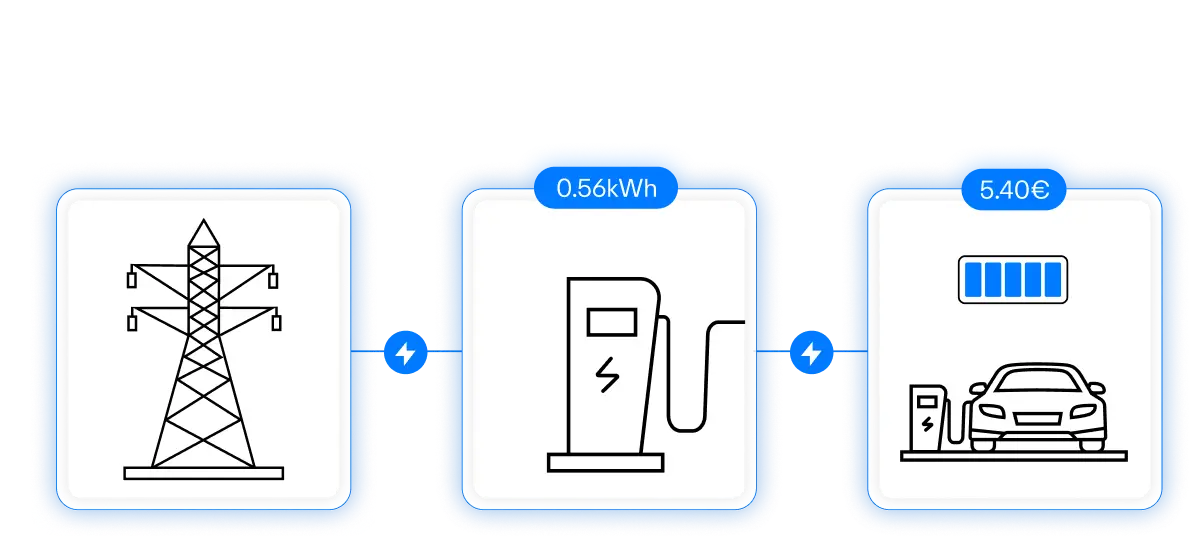
Grid operators (TSOs) pay for flexibility: assets that can ramp down or pause on deeeemand to keep the grid balanced. Your charge points are exactly that kind of asset. A car plugged in for eight hours, but needing four hours of energy is flexible for the other four. Monta turns it into a monthly revenue stream in addition to charging.
Three roles, one revenue stream

You stay in control
You own the charge points, and drivers choose whether to opt in or out at any time.

Monta does the work
Monta translates grid signals into OCPP commands across your network, continuously and automatically, with no manual effort from your team.

The aggregator sells it
An aggregator bundles your charge points into a portfolio and bids them into the TSO’s balancing market, turning flexibility into revenue.
Grid revenue is already live
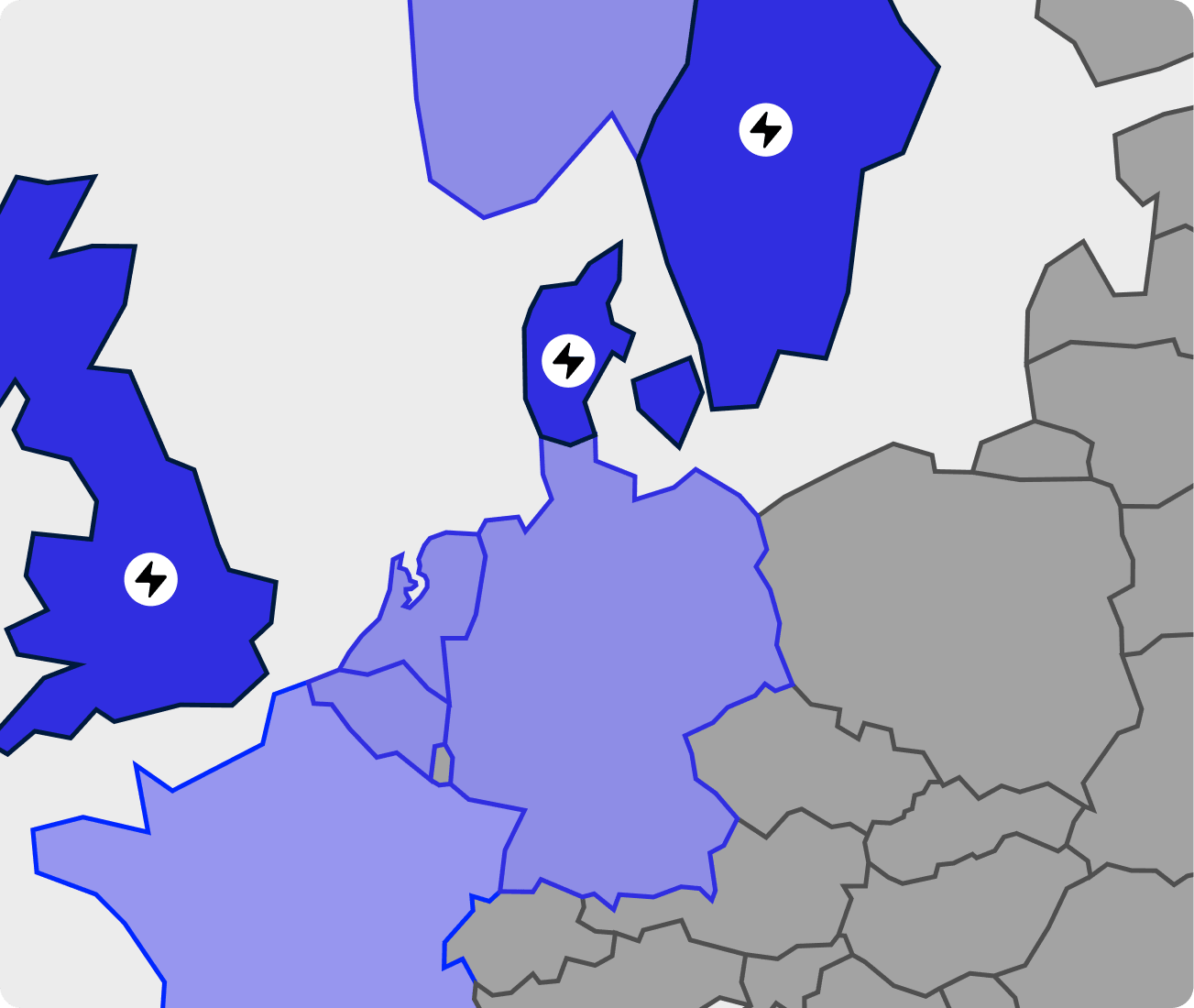
Operators are already earning:
- Denmark — 40,000+ charge points earning across four operators (aFRR via Hybrid Greentech, FCR via Flower)
- United Kingdom — Operators earning monthly across two revenue streams (Balancing Mechanism and Capacity Market via Axle Energy)
- Sweden — A portfolio close to activation (ancillary services via Flower)
Monta will participate in 100 MW+ of grid services across five markets this year, with France, Belgium, the Netherlands, Germany, and Norway next. The same framework launches in every European market, so once an aggregator partner is engaged, Monta can go live within weeks.
Watch our recent webinar on grid revenue with aggregator Hybrid Greentech
Stack four revenue streams on every charge point
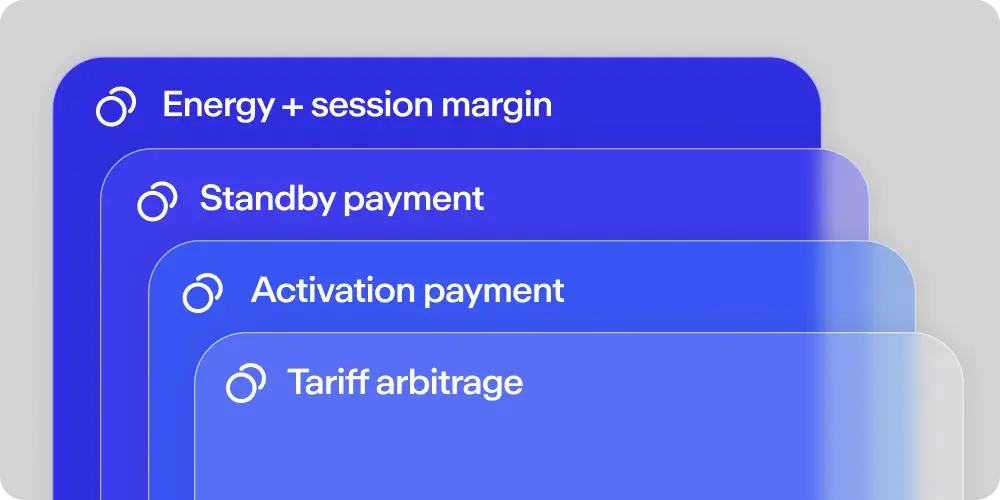

Energy + session margin
What you already earn today.

Standby payment
Paid every hour your charge points are available for activations, called or not. (aFRR capacity.)

Activation payment
Paid every time your charge points actually are paused or curtailed during an aFRR activation.
Tariff arbitrage
Smart charging shifts sessions to lower-price hours.
Earn grid revenue without the complexity

You don’t need to figure this out
Monta’s grid experts handle the complexity, with a seat at the EU grid-flex regulatory table as a smartEn member. You stay focused on running your network.
You don’t need 1 MW of capacity
Aggregators pool your charge points into a FCR portfolio to clear any thresholds.
You don’t become a trader
Monta orchestrates. The aggregator trades.
You don’t need new hardware
If your charge points are on Monta and grid-eligible, participation is a setting.
You don’t carry penalty risk
The aggregator absorbs underperformance. Monta tracks per-charge point response.
FAQs
It depends on the bidding strategy and market activity. Most activations are short 5-second curtailments to half power. Most flexed charge points are home charge points, where drivers do not notice the brief drop. Some markets have the potential to do long activations. Longer pauses only happen when the revenue justifies them, because aggregators price bids to reflect customer-experience cost. The longest activation on Monta’s network has been three hours overnight, with most drivers still waking up to a fully charged car. The exact experience is aligned in the agreement drivers opt into per session, and they can opt out anytime.
Most modern charge points with direct OCPP connections qualify. Cloud-based OCPP does not react fast enough. Monta tests every charge point model and firmware for compatibility, including ~100ms reaction times on power setpoints. On our supported charging stations page you can filter for hardware models where grid services is available by filtering for ‘PowerBank’.
PowerBank is how Monta labels grid services across our product UI and driver-facing messaging. On the supported charging stations page, filtering by PowerBank shows the models that are grid-eligible. In Monta driver apps, PowerBank is the brand drivers see to describe grid services. Same grid services product as described on this page but just a driver-friendly name.
Home and depot charging are the best fit. A car plugged in for eight hours but needing four hours of energy is flexible for the other four. Workplace and fleet sites also qualify. Public AC charging can be excluded per-charge point. Public DC charging is not suitable because drivers expect full speed.
It depends on the market, but in most markets, aggregators pool your charge points into an overall portfolio so you do not need to worry about clearing MW thresholds on your own. You can also control how much of your network is bid in.
It depends on the market. For most flexibility products, no. EU independent-aggregator rules separate flexibility from the supply contract, and Monta’s aggregator partners hold BRP-to-BRP agreements with major retailers in each market, covering CPOs that are not retailers themselves. aFRR is the exception: participating in aFRR requires holding the electricity contract. CPOs that also operate as retailers see compounded value across all products.
Penalty risk sits with the aggregator, not you. Aggregators size bids with headroom across diversified portfolios, so a few no-shows do not sink the bid. Aggregators that consistently underperform get removed from TSO markets, which is why Monta partners only with proven traders with clean records.
Three things need to align: an aggregator partner with the right BRP/BSP relationship, market access (regulatory + TSO products), and a portfolio of compatible charge points in the bidding zone. Once aligned, Monta can support any operator quickly, especially in the EU where we have already rolled out this framework in similar markets. France, Belgium, Netherlands, Germany, and Norway are on the roadmap for 2026.