Plug & Charge. AutoCharge. Both on Monta.
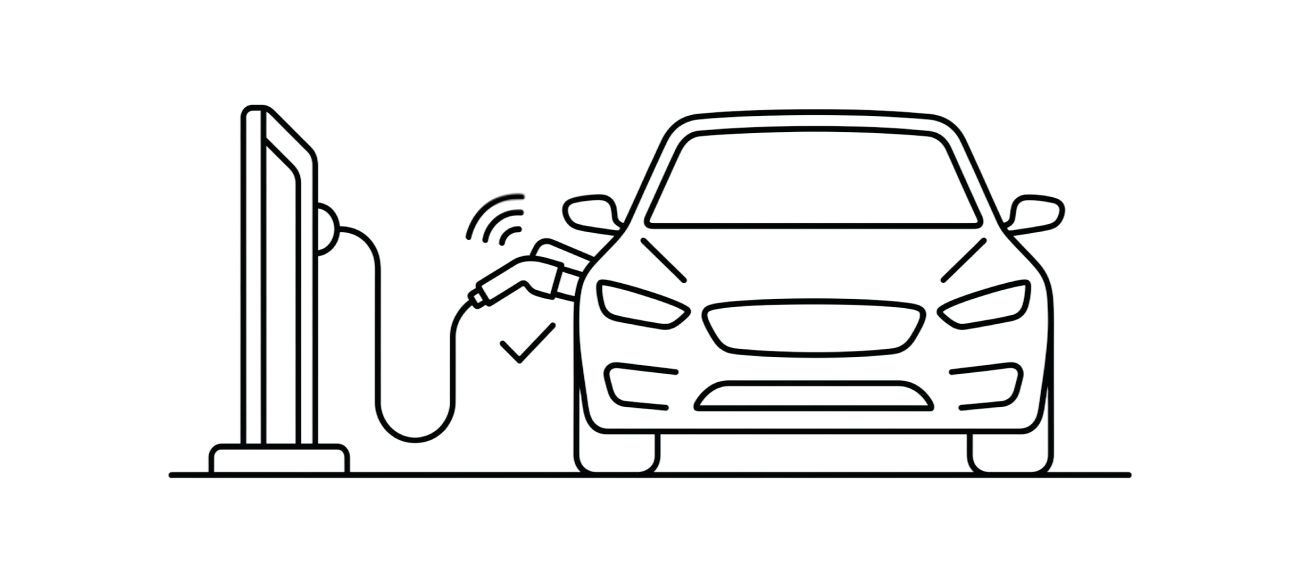
Plug in. The session starts. No app, no card, no PIN.
Plug & Charge where the hardware supports it, AutoCharge where it doesn’t. Monta validates the hardware for each and turns it on per charging station.
Two paths to frictionless charging
Plug & Charge
Plug & Charge uses the ISO 15118-2 standard: the car presents an encrypted digital contract certificate over a secure connection.
AutoCharge
AutoCharge is lighter: the charging station reads the vehicle’s own identifier over OCPP, with no certificate involved.
Plug & Charge
Built on ISO 15118-2. The car and the charging station establish a secure, encrypted connection, the car presents its digital contract certificate, and Monta authorizes the session in the background.
What Monta runs
Monta is the CPO backend. We manage the charging station's digital identity and install and renew the global trust anchors (V2G and Mobility Operator roots) the station needs to verify vehicles. Monta also handle Certificate Signing Request (CSR) routing to provision the station's unique SECC Leaf Certificate.
The eMSP boundary
Monta runs the operator side of Plug & Charge. We do not act as the eMSP and we do not issue contract certificates to vehicles. So a Plug & Charge session is a roaming session: the driver brings a vehicle that already holds a valid contract certificate from a third-party eMSP, provisioned through a network like Hubject. (Taking on the eMSP role is on our roadmap, see our FAQs)
Where it runs today
NexBlue leads on AC, with its Edge and Point ranges (Edge 2, Edge Max, Point 2) and its Delta range (Delta, Delta Max). On DC, validated models include the Alpitronic HYC series and ABB A400 and C50. The list is growing through 2026, and the live, filtered hardware page is the source of truth for what is supported right now.
What Plug & Charge needs to work
Plug & Charge is a standardized ecosystem. For a session to start on its own, three things have to line up.

A compatible EV and eMSP contract
The vehicle supports ISO 15118-2 and the driver holds an active contract certificate issued by a third-party eMSP.

A charging station that can do it
The hardware supports ISO 15118-2 communication and certificate handling. On AC this is genuinely hard: the station has to run the encrypted ISO 15118 stack alongside the older analogue fallback and switch cleanly between them, which is why only a handful of models are validated so far.

A CPMS that enables it
The backend securely manages the station’s certificates and connects it to global PKI and roaming networks like Hubject. Monta does this automatically on validated models, implementing the Open Charge Alliance application note for ISO 15118 Plug & Charge on OCPP 1.6. Support for OCPP 2.0.1 is under development.This is the only aspect of Plug & Charge that is in Monta’s control.
The frictionless charging experience drivers expect
AutoCharge
A lighter, less secure version of the same seamless experience. The charging station reads the vehicle’s own identifier, the VID, on the first session. (You will also see this called the EVCCID or the vehicle MAC address. In this context they refer to the same thing: a stable identifier the car broadcasts.) Monta maps that VID to the driver’s wallet, and from then on every plug-in starts the session automatically. No contract certificate, no PKI provisioning.
Why operators run this on Monta
Validated through onsite interoperability testing
Before a manufacturer is publicly listed for AutoCharge and Plug & Charge, Monta runs interoperability testing either remotely or at our Copenhagen hardware lab. Physical charging station samples, compatible EVs, a live backend. End-to-end certificate provisioning, installation, and real Plug & Charge sessions, run under real conditions, first against a staging environment and then in production.
NexBlue, the Swedish manufacturer, flew its engineers to Copenhagen in January 2026 (through a snowstorm) and became the first manufacturer publicly listed for AC Plug & Charge on Monta. Multiple AC and DC manufacturers are in active testing, with more announcements expected through 2026.
“Plug & Charge on AC charging is one of those milestones that sounds straightforward but requires serious technical collaboration to get right. NexBlue’s team flew to Copenhagen for onsite testing, and together we built something that changes how drivers experience AC charging. They’re the first of several manufacturers we’re working toward this milestone with, and this is just the beginning.”
Casper Rasmussen, CEO, Monta
FAQs
Plug & Charge uses ISO 15118-2 contract certificates issued to the vehicle. AutoCharge uses the vehicle’s own identifier (the VID, also called the EVCCID or vehicle MAC address) sent over OCPP. Same driver experience, different hardware and car requirements, and Plug & Charge is the more secure of the two.
NexBlue on AC (the first manufacturer listed), across its Edge, Point, and Delta ranges, plus DC models such as the Alpitronic HYC series and ABB A400 and C50. The current list is always on the supported hardware page, and more manufacturers are in active testing through 2026.
Yes. On hardware that supports both, each is enabled per charging station from Monta. The Alpitronic HYC series is a current example.
Adoption is still early. Less than 1% of monthly Monta sessions use Plug & Charge. The hardware list is growing, the standards are stabilizing, and operators with validated charging stations can offer it now.
Monta is a Hubject roaming partner, and Plug & Charge sessions are exposed to eMSP roaming partners through Hubject, which also acts as the PKI holder. Monta taking on the eMSP role itself (issuing contract certificates) is in active development. See the roadmap item here.
For Plug & Charge, no. The car authenticates itself once it holds a contract certificate from its eMSP. For AutoCharge, the driver does a one-time setup in the Monta app per vehicle, then plugging in is automatic.
Hubject offers a public list of certified ecosystem players, including vehicle manufacturers and their supported models. See more here.
The process depends on the vehicle and eMSP of choice, and whether they work with each other. At the current state of the ecosystem, the eMSP that works with a vehicle is typically the OEM’s own eMSP subsidiary.