
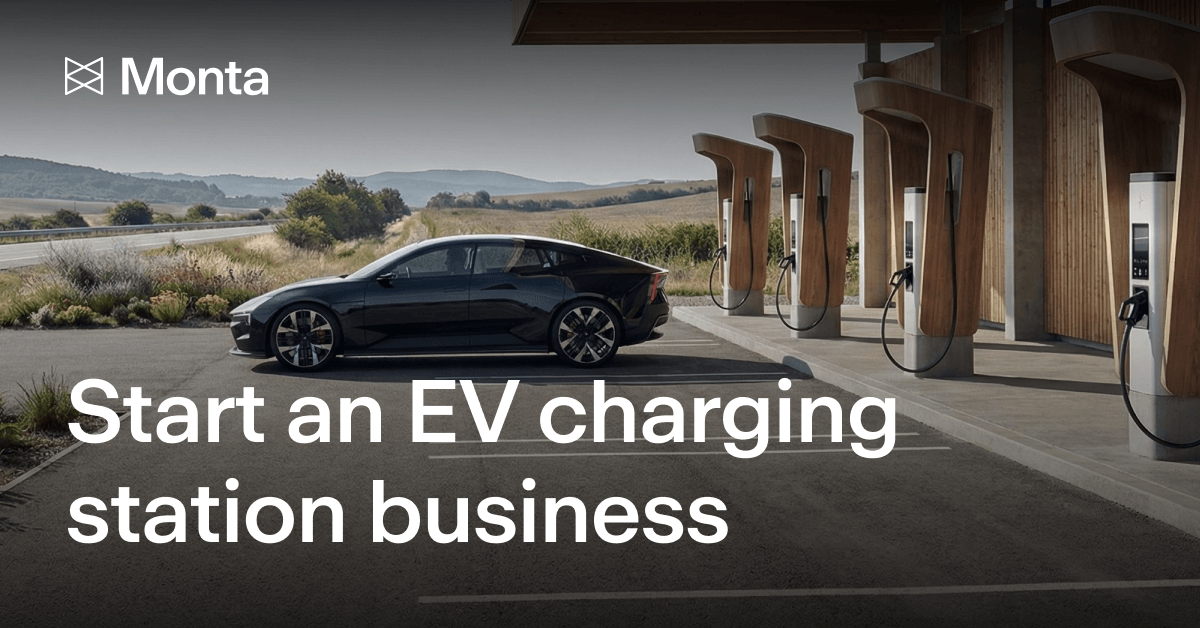
To start an EV charging station business, a Charge Point Operator (CPO) must follow a structured process that moves from planning to full operation. The process begins with evaluating market demand, site feasibility, grid capacity, and expected utilisation to confirm commercial viability and long-term profitability. Equipment selection and site design follow, where AC or DC charge points are chosen based on location type and charging demand. Regulatory approvals, permits, and utility connections must be secured before installation begins. Total startup cost typically ranges from £10,000 to £50,000 ($12,500–$62,000, €11,500–€58,000) for AC sites and £50,000 to £250,000 ($62,000–$310,000, €58,000–€290,000) for DC fast charging locations. Charging software, pricing models, and payment systems are then configured to enable revenue generation and operational control. Installation and commissioning complete the setup, after which the business focuses on increasing utilisation, maintaining uptime, and expanding to additional locations to achieve scalable growth and sustained return on investment.
To start an EV charging station business, follow the eight steps listed below.
- Research the market and select the right location. Market research and site selection identify high-demand locations based on traffic patterns, EV adoption, and charging needs to maximise utilisation and revenue potential.
- Choose the right chargers and charging setup. Charger selection defines the appropriate mix of AC and DC charge points based on site usage, dwell time, and available electrical capacity.
- Secure permits, site agreements, and utility approval. Permits, agreements, and utility approvals ensure legal compliance, site access, and sufficient power supply before installation begins.
- Set up pricing, payments, and charging software. Pricing models, payment systems, and charging software establish how revenue is generated, managed, and monitored across the charging network.
- Install and commission the charging infrastructure. Installation and commissioning deploy the equipment, connect electrical systems, and verify that all charge points operate safely and correctly.
- Launch operations and grow charger utilisation. Operational launch focuses on attracting users, increasing charging sessions, and optimising performance to drive long-term profitability.
1. Research the market and select the right location
Analysing demand, traffic patterns, and competitor presence to identify profitable charging locations. The importance of such a step is critical because location directly determines utilisation, revenue potential, and long-term success. Select sites in retail centres, motorway service areas, urban hubs, or fleet depots with consistent vehicle flow.
2. Choose the right chargers and charging setup
Select appropriate charge points based on power level, user demand, and site capacity. The importance of such a step is high because charger selection affects installation cost, charging speed, and customer satisfaction. Examples include AC charge points for workplaces and retail, and DC fast charge points for high-traffic locations, with decisions guided by available EV charger types.
3. Secure permits, site agreements, and utility approval
Obtain legal approvals, negotiate site access, and secure grid connection from utility providers. Securing permits is essential because regulatory compliance and electrical capacity determine whether the project can proceed. Plan permission approval, lease agreements with property owners, and utility load assessments.
4. Set up pricing, payments, and charging software
Configure pricing models, payment systems, and software platforms that manage charging operations. The importance of such a step is significant because revenue generation, user access, and system control depend on proper setup. Examples include per kWh pricing, subscription plans, and integration with Monta EV Charging Management Software for monitoring, user management, and payment processing.
5. Install and commission the charging infrastructure
Deploy hardware, connecting electrical systems, and verifying operational readiness before launch. The importance of the step is critical because proper installation ensures safety, performance, and compliance with standards. Examples include site preparation, electrical wiring, system testing, and activation of EV Charging Infrastructure for public or commercial use.
6. Launch operations and grow charger utilisation
Manage daily charging activity while increasing usage and revenue across the network. The importance of the step is high because sustained utilisation drives profitability and return on investment. Examples include marketing campaigns, partnerships with fleets or businesses, dynamic pricing strategies, and continuous performance monitoring.
What is an EV charging station business?
An EV charging station business is a commercial operation that provides paid access to electric vehicle charging services through fixed charge points installed at permanent locations. The model functions as an infrastructure-based service where a Charge Point Operator (CPO) owns or manages the charging equipment, sets pricing, and oversees network performance, maintenance, and customer access. Revenue is generated through charging fees, subscriptions, or usage-based pricing while the business maintains reliable, grid-connected infrastructure. The structure of an EV charging station business focuses on long-term asset utilisation, site optimisation, and scalable network expansion across multiple locations.
How much does an EV charging station business cost to start?
Starting an EV charging station business costs between £10,000 and £50,000 ($12,500–$62,000, €11,500–€58,000) for small AC charge point deployments and between £50,000 and £250,000 ($62,000–$310,000, €58,000–€290,000) per site for DC fast charging installations. Total investment depends on site acquisition, electrical upgrades, equipment, permitting, and network integration. Higher-capacity sites with multiple charge points and grid upgrades increase capital requirements significantly. Detailed planning of EV charging station infrastructure costs determines budget allocation, return on investment, and long-term scalability for a charge point operator business.
Is commercial EV charger installation expensive?
Yes, commercial EV charge point installation is expensive. Installation costs for EV charging infrastructure are high due to requirements for electrical upgrades, grid connection, equipment, and site preparation. A commercial EV charger installation ranges from £5,000 to £50,000 ($6,200–$62,000, €5,800–€58,000) for AC systems, while DC fast charge installations range from £50,000 to £250,000 ($62,000–$310,000, €58,000–€290,000) depending on power capacity and site complexity. Total cost depends on location, number of charge points, and required infrastructure upgrades.
Is owning electric charging stations a good long-term investment?
Yes. Owning electric charging stations is a good long-term investment when strong site selection, consistent utilisation, and effective pricing support steady revenue growth. Increasing electric vehicle adoption drives long-term demand for charging infrastructure, which supports recurring income from charging fees and network usage. Capital investment is recovered over time through high-traffic locations and reliable utilisation. Stable demand, scalable expansion, and integration with energy and transport systems position charging infrastructure as a durable revenue-generating asset for charge point operators.
What is a mobile EV charging station business?
A mobile EV charging station business is a service model that delivers electricity to electric vehicle drivers using portable charging units or battery-equipped vehicles rather than fixed charge points. The service operates as a supplementary solution that supports specific use cases (emergency charging, temporary demand at events, roadside assistance, or areas without established infrastructure). Mobile charging provides flexibility and rapid deployment, although it does not replace the scalability and continuous availability of site-based charging networks. A fixed EV charging station business, operated by a Charge Point Operator (CPO), relies on permanent installations and grid-connected infrastructure, which supports higher utilisation, consistent revenue generation, and long-term network growth.
How to scale an EV charging station business?
To scale an EV charging station business, follow the eight steps listed below.
- Expand to Additional Locations. Growth begins by identifying and securing new high-demand sites (for example, retail centres, motorway corridors, or urban hubs). Replicating successful site models increases utilisation and revenue across multiple locations.
- Increase Charge Point Density. Capacity expansion occurs by adding more charge points at existing sites to serve higher demand. Higher availability reduces wait times and increases total charging sessions per location.
- Upgrade to Faster Charge Points. Performance improves by introducing higher-power DC charge points at strategic locations. Faster charging supports higher turnover and increases revenue per unit, particularly in high-traffic areas.
- Form Strategic Partnerships. Partnerships with property owners, retail operators, fleet companies, and energy providers create new deployment opportunities and shared investment structures. Collaboration accelerates market expansion and improves site access.
- Implement Charging Management Software. Centralised platforms (for example, Monta) manage pricing, monitoring, user access, and energy usage across multiple sites. Software enables remote control, operational consistency, and data-driven decision-making.
- Standardise Operations and Deployment. Operational efficiency improves through standardised installation processes, equipment selection, and maintenance procedures. Repeatable site setups reduce deployment time and lower installation costs.
- Optimise Pricing and Utilisation. Revenue growth depends on dynamic pricing strategies aligned with demand, location, and energy costs. High utilisation rates increase profitability and support faster return on investment.
- Secure Funding and Reinvest Profits. Expansion requires capital from reinvested earnings, financing, or external investment. Structured funding supports continuous growth while maintaining financial stability across the charging network.
What are the best locations for an EV charging station?
The best locations for an EV charging station are listed below.
- High-Traffic Urban Areas: Placement in city centres with consistent vehicle flow supports high utilisation and frequent charging sessions. Dense traffic patterns increase demand and improve revenue potential per charge point.
- Retail and Shopping Centres: Installation at retail locations attracts customers who charge vehicles while shopping. Longer dwell time supports steady charging usage and increases site revenue opportunities.
- Workplaces and Office Complexes: Deployment at offices supports employee charging during working hours. Predictable parking duration aligns with Level 2 charging and ensures consistent daily utilisation.
- Motorway Service Areas: Positioning along major transport corridors supports long-distance drivers who require rapid charging. High turnover at service areas increases usage of DC fast charge points.
- Fleet Depots and Logistics Hubs: Installation at fleet depots supports controlled charging for commercial vehicles. Centralised charging infrastructure ensures efficient operations and predictable energy demand.
- Hotels and Hospitality Locations: Placement at hotels and resorts supports overnight charging for guests. Extended parking duration allows consistent use of AC charge points.
- Residential Complexes and Apartments: Deployment in multi-unit residential buildings supports shared access for tenants. Managed charging systems ensure fair usage and efficient operation across multiple users.
- Airports and Transport Hubs: Installation at airports and transit locations supports travellers who park vehicles for extended periods. High vehicle turnover and long parking durations increase charging demand and utilisation.
Can small businesses own EV charging stations?
Yes. Small businesses can own EV charging stations and operate them as part of a commercial service or as an added customer amenity. Ownership requires investment in charge points, installation, and grid connection, along with compliance with local regulations and payment systems. Businesses generate revenue through charging fees or using charging infrastructure to attract customers, increase dwell time, and support long-term business growth.
How do EV charging stations make money?
EV charging stations make money by charging users based on energy consumption (per kWh), time-based fees, flat session charges, or subscription plans that provide bundled access. Revenue is generated each time a vehicle charges, with pricing structured to cover electricity costs, operating expenses, and infrastructure investment. Profitability depends on charger utilisation, site location, and pricing strategy, as high-traffic locations with consistent demand produce greater revenue per charge point. Effective pricing and strong utilisation levels increase earnings, support cost recovery (often from installations costing £50,000 to £250,000 ($62,000–$310,000, €58,000–€290,000)), and drive long-term profitability for charging station operators.
How do EV charging business models generate revenue?
EV charging business models generate revenue through charging fees based on energy consumption (per kWh), time-based pricing, or flat session rates, combined with subscription plans for regular users and fleet contracts for predictable usage. Operators earn additional income through roaming agreements, which provide access to wider networks and include transaction fees from partner platforms. Strategic pricing, location selection, and utilisation levels determine overall profitability, with high-traffic sites producing greater revenue per charge point. Diversified revenue streams within EV charging business models support stable income, cost recovery, and long-term business growth for charge point operators.
Is an EV charging station business profitable?
Yes. An EV charging station business can be profitable when high utilisation, effective pricing, and strategic site selection support consistent revenue generation. Profitability depends on electricity costs, installation investment (typically £50,000 to £250,000 ($62,000–$310,000, €58,000–€290,000)), and ongoing operating expenses such as maintenance and network fees. Strong performance occurs in high-traffic locations where charging demand remains steady, which supports faster return on investment and long-term revenue growth, making EV charging stations profitable under the right operating conditions.
What permits are required to open an EV charging station?
The permits required to open an EV charging station are listed below.
- Business Registration Permit: Legal operation requires a registered business entity with appropriate local licences that authorise commercial activity and service provision.
- Planning and Zoning Approval: Local planning authorities must approve site use to confirm that EV charge points are permitted within the selected location and comply with land use regulations.
- Electrical Installation Permit: Electrical permits are required to install high-capacity wiring, panels, and charge points in accordance with national electrical codes and safety standards.
- Grid Connection Approval: Utility providers must approve connection to the electrical grid, which includes capacity assessment, transformer requirements, and service upgrades where necessary.
- Building and Construction Permits: Construction permits authorise physical installation work (trenching, foundations, mounting structures, and equipment enclosures) at the site.
- Environmental and Compliance Permits: Environmental approvals may be required depending on site conditions and local regulations, particularly for large installations or developments in regulated areas.
- Payment and Data Compliance Registration: Regulatory compliance for payment processing and data protection ensures that billing systems, user data handling, and transaction processing meet legal standards.
- Operational Certification and Inspection Approval: Final inspection and certification confirm that the installation meets safety, electrical, and operational standards before the charge points are opened for public or commercial use.
How long does it take to set up an EV charging station business?
Setting up an EV charging station business takes between 3 and 12 months, depending on site selection, permitting, grid connection timelines, and equipment procurement. The process includes securing a suitable location, obtaining permits and regulatory approvals, completing electrical design, arranging utility upgrades, and installing charge points with network integration. Grid connection approvals and construction complexity often determine the timeline, with straightforward sites completed in a few months and larger commercial deployments requiring longer development periods.
Do I need a license to operate EV chargers?
Yes, you need a license to operate EV chargers. Operating EV charge points typically requires compliance with licensing and regulatory requirements that vary by country and region. A charge point operator must complete business registration, meet electrical installation standards, and comply with payment processing and data protection regulations. Energy-related approvals likely apply in certain markets where electricity resale is regulated. Local authorities or energy regulators define the exact requirements, which ensure that EV charging operations remain safe, legally compliant, and suitable for public or commercial use.