
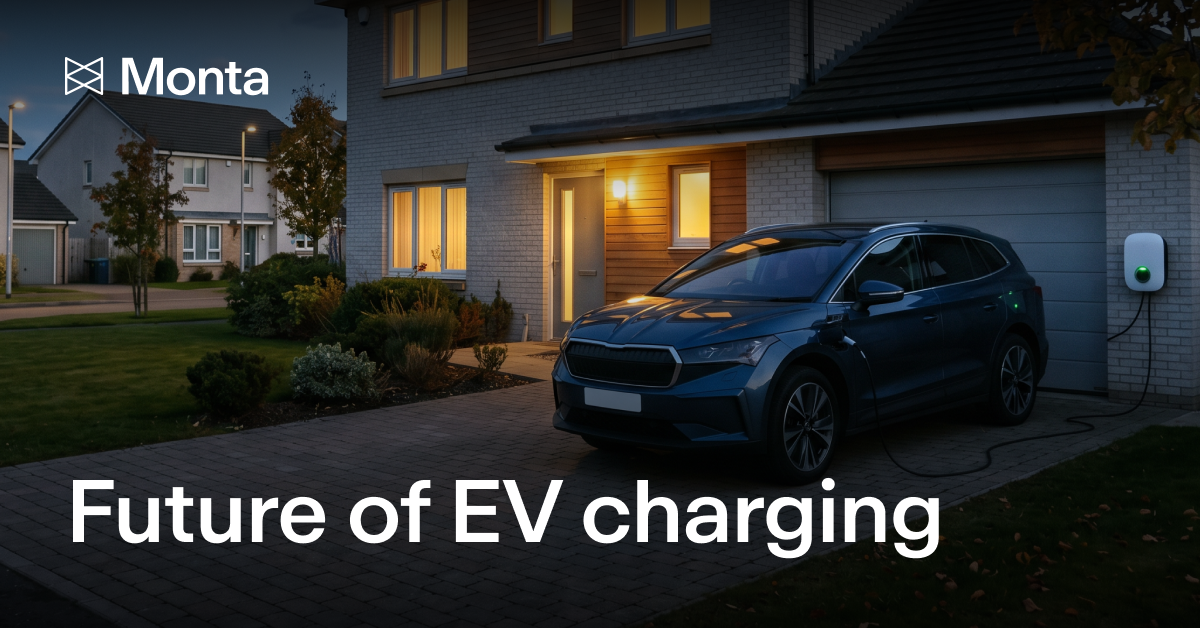
The future of EV charging centres on faster charging speeds, wider network coverage, and smarter energy management that supports growing electric mobility demand. The future of EV charging will include ultra-fast and megawatt-scale systems that reduce charging time, while future EV charging stations expand across motorways, urban corridors, workplaces, and fleet depots to ensure reliable access. Intelligent load management, dynamic pricing, and automated authentication will optimise energy use and simplify the charging experience. Integration with power grids, renewable energy sources, battery storage, and digital platforms will improve resilience, reduce peak demand, and support sustainable energy use. Electric vehicle charging forecast models indicate continued infrastructure expansion and technological advancement to support large-scale EV adoption over the next decade.
What is the future of EV charging?
The future of EV charging will combine ultra-fast charging, intelligent energy management, and bidirectional power flow to create a faster, more flexible, and grid-integrated energy ecosystem. Ultra-fast and megawatt-scale charge points reduce EV charging times and support long-distance travel and heavy-duty transport, while smart charging systems optimise energy use based on grid demand, pricing, and renewable availability. Bidirectional charging enables vehicles to supply power back to buildings or the grid, supporting resilience and energy balancing. Charging becomes increasingly automated through Plug & Charge authentication, vehicle-to-charge point communication, and seamless payment systems, making the experience more convenient and user-friendly.
How will EV charging evolve over the next decade?
EV charging will evolve over the next decade through higher power delivery, smarter energy management, broader network coverage, and deeper grid integration. Ultra-fast charging and megawatt systems will reduce charging times and support heavy-duty transport, while widespread home, workplace, and depot charging will handle most daily energy demand. Smart charging, dynamic pricing, and load management will optimise energy use and reduce grid strain. Vehicle-to-grid capability and onsite energy storage will support grid stability and renewable integration. Interoperability standards and roaming access will improve network compatibility, while charging sites will expand into mobility hubs that combine energy services, retail amenities, and digital connectivity.
How fast is the EV charging market growing?
The EV charging market is growing at a rapid double-digit growth rate worldwide, with most industry forecasts placing annual growth between 20% and 30% through the next decade. The global EV charging infrastructure market is projected to grow at roughly 25% CAGR from 2026 to 2033, rising from about $40 billion in 2025 to nearly $239 billion by 2033. Additional analyses show similar momentum, with projections of about 20% CAGR through 2032 and forecasts near 27% annual growth through the mid-2030s. Growth is driven by accelerating EV adoption, government incentives, emissions targets, and large private investments in fast-charging corridors, fleet charging depots, and residential installations. Falling hardware costs, smart charging software, and grid integration solutions are further accelerating deployment, positioning charging infrastructure as one of the fastest-growing segments of the global energy and transportation transition.
How fast will EV charging networks grow?
EV charging networks are growing rapidly, with global public charging infrastructure expected to grow at 20% to 30% annually through the 2030s to support accelerating electric vehicle adoption. International energy forecasts project tens of millions of public charging points worldwide by 2030, compared with only a few million today, while private home and workplace charge points will grow even faster. Government mandates, emissions targets, automaker electrification strategies, and private investment in fast-charging corridors and urban charging hubs drive growth. Investment in EV charging networks is expanding high-power charging for fleets and long-distance travel alongside widespread residential and workplace charging, which together support scalable infrastructure and reliable access as EV adoption increases.
Will public charging keep up with EV adoption?
Yes. Public charging is expected to keep pace with EV adoption, but continued investment and grid planning remain essential. Governments, utilities, and private operators are expanding fast-charging corridors, urban charging hubs, and destination charging to meet growing demand for EV public charging. Deployment targets and funding programmes support infrastructure growth, while smart charging and load management improve utilisation of existing sites. Charging demand is balanced by home, workplace, and fleet charging, which reduces pressure on public networks and supports reliable access as EV ownership increases.
How many EV charging stations will be needed in the future?
Millions of additional EV charging stations will be needed globally to support the transition to electric mobility. International energy and transport forecasts indicate that tens of millions of public charge points and hundreds of millions of private and workplace charging points will be required by 2030–2040 to meet projected EV adoption levels. Public fast-charging infrastructure must expand along highways, urban corridors, and logistics routes, while most charging demand will be met through home, workplace, and depot installations supported by strategically located charging stations.
Total infrastructure needs depend on EV adoption rates, urban density, vehicle usage patterns, and charging behaviour. Dense urban areas require more public and shared charging, while suburban regions rely more heavily on home charging. Fleet electrification, heavy-duty transport, and long-distance travel corridors will increase demand for high-power charging hubs. Strategic deployment planning ensures reliable access, minimises grid strain, and supports widespread EV adoption.
Which regions will add the most EV charge points?
The regions that will add the most EV charge points are listed below.
- China: China leads global charge point deployment due to national electrification mandates, urban air quality initiatives, and large public charging networks supported by state and private investment.
- European Union: EU member states are expanding cross-border charging corridors and urban infrastructure to meet emissions targets and support widespread EV adoption.
- United States: Federal infrastructure funding, state incentives, and private investment are driving the rapid expansion of highway fast-charging networks and urban charging access.
- United Kingdom: National electrification targets and building regulations requiring EV-ready infrastructure are accelerating residential, workplace, and public charge point installations.
- India: Government electrification programmes, urban pollution reduction efforts, and growth in electric two- and three-wheel vehicles are increasing charge point deployment.
- Southeast Asia: Emerging EV markets in Southeast Asia (Thailand, Indonesia, Singapore, and Vietnam) are expanding charging networks to support transport electrification and tourism mobility.
- Nordic countries: High EV adoption rates in Norway, Sweden, and Denmark and other Nordic countries continue to drive dense charging infrastructure and high-power corridor expansion.
- Middle East: Energy diversification strategies and smart city initiatives are supporting charge point deployment in the Middle East.
Can the power grid handle future EV charging demand?
Yes, the power grid can handle future EV charging demand, but expansion and smarter energy management are necessary to support widespread electrification. Utilities are increasing generation capacity, reinforcing transmission and distribution networks, and upgrading transformers and substations to accommodate higher loads. Smart charging shifts demand to off-peak hours, while demand response programmes, onsite energy storage, and renewable integration reduce peak load stress. Targeted local upgrades support high-power charging hubs, and coordinated planning among utilities, regulators, and charging providers ensures grid reliability as EV adoption grows.
Which trends will shape EV charging infrastructure?
The trends that will shape EV charging infrastructure are listed below.
- Ultra-fast and high-power charging: Deployment of 150–350 kW fast charge points and megawatt-scale systems is accelerating to reduce charging time and support long-distance travel and heavy-duty transport.
- Smart charging and load management: Intelligent charging systems optimise charging speed and timing based on grid demand, electricity pricing, and site capacity to reduce peak load stress.
- Vehicle-to-grid (V2G) integration: Bidirectional charging enables EV batteries to supply stored energy back to buildings or the grid, supporting energy resilience and grid balancing.
- Onsite energy storage and renewable integration: Battery storage and solar generation help manage peak demand, stabilise energy supply, and reduce operating costs at high-use charging sites.
- Software-driven optimisation: Network management platforms use data analytics, predictive maintenance, and remote monitoring to improve uptime, utilisation, and operational efficiency.
- Interoperability and open standards: Adoption of open protocols and roaming frameworks enables cross-network access, consistent user experience, and scalable infrastructure expansion.
- Fleet and depot charging expansion: Electrification of logistics, transit, and commercial fleets is driving large-scale depot charging installations with high-capacity electrical infrastructure.
- Integrated mobility hubs: Charging sites are evolving into multi-service hubs that combine energy delivery, retail amenities, and digital services to support longer dwell times.
What innovations are coming in EV charging?
EV charging innovation is advancing rapidly as automakers, utilities, and technology providers work to reduce charging time, improve convenience, and integrate vehicles with the power grid. Ultra-high-power charging systems, including megawatt charging for heavy-duty vehicles, are enabling rapid energy transfer that supports freight and transit electrification and reduces operational downtime. Wireless inductive charging is emerging for home, fleet, and public environments, allowing vehicles to recharge without cables and improving convenience and safety. Smart charging and vehicle-to-grid integration allow EVs to interact with energy networks, enabling bidirectional power flow and supporting grid stability and renewable energy use. Battery innovations and integrated power electronics are improving efficiency and reducing charging times, while battery swapping models provide rapid energy replenishment for fleets and high-utilisation vehicles. Dynamic wireless charging embedded in roadways and advanced plug-and-charge authentication systems further simplify charging access and reduce friction in daily use.
How will smart charging shape the future EV charging market?
Smart charging will shape the future EV charging market by optimising energy use, reducing grid strain, and enabling cost-efficient charging across homes, fleets, and public networks. Intelligent control systems adjust charging speed and timing based on grid demand, electricity pricing, and renewable energy availability, which lowers peak load pressure and supports grid stability. Utilities and operators shift charging to off-peak periods, balance loads across multiple charge points, and integrate onsite solar generation and battery storage to reduce energy costs.
Smart charging enables dynamic pricing, automated billing, and demand response participation, which creates new revenue models and incentives for drivers and fleet operators. Vehicle-to-grid and bidirectional charging capabilities allow EV batteries to supply stored energy back to buildings or the grid, supporting resilience and energy balancing. Data analytics and network management platforms improve charge point utilisation, predict maintenance needs, and enhance operational efficiency. The capabilities support scalable infrastructure growth, lower operating costs, and strengthen the role of EV charging within the broader energy ecosystem.
How are fuel stations adding EV charge points?
Fuel stations are adding EV charge points by installing DC fast charge points and developing high-power charging hubs that serve drivers who need rapid energy replenishment during travel stops. Operators select high-visibility forecourt areas for charging bays, reconfigure parking layouts to allow safe vehicle access, and add protective bollards, lighting, and clear signage to guide traffic flow. Electrical upgrades are a core part of deployment. Sites often require increased utility service capacity, new transformers, upgraded switchgear, and load management systems to support high-power demand. Network connectivity enables payment processing, remote monitoring, and uptime management. Many fuel retailers integrate charging with retail amenities and seating areas to support longer dwell times while vehicles charge.
Can a petrol station be converted into an EV charging site?
Yes. A petrol station can be converted into an EV charging site, and many operators are pursuing this transition to support electric mobility demand. Existing forecourts offer strategic advantages such as prime roadside locations, established customer traffic, parking space, and access to electrical infrastructure. Conversion involves installing AC and DC fast charge points, upgrading electrical service capacity, adding transformers or switchgear, and redesigning parking layouts to support charging bays. Sites often add lighting, signage, and safety barriers while integrating payment systems and network connectivity.
High-power charging installations may require utility coordination and significant grid upgrades to support increased electrical demand. Fuel services often remain during the transition period, allowing the site to operate as a multi-energy hub while EV adoption grows.
How much does it cost to convert a petrol station to EV charging?
Converting a petrol station into an EV charging site typically costs £80,000 to over £800,000+ (€95,000 to €950,000+ / $100,000 to $1 million+), depending on charge point power levels, site capacity, and electrical upgrades. Small installations with a limited number of AC or low-power DC charge points remain below £100,000, while high-power fast-charging hubs with multiple 150–350 kW units often exceed £400,000 due to equipment costs, civil works, and grid connection upgrades.
Total project cost depends on the number of charge points, required power capacity, trenching and construction work, transformer upgrades, switchgear, and utility service enhancements. High-power sites frequently require significant electrical infrastructure investment, including new transformers, upgraded feeders, or on-site substations to support megawatt-scale demand. Additional expenses include site redesign, parking modifications, lighting, signage, and network connectivity.
Will petrol stations become EV charging hubs?
Yes. Many fuel stations are evolving into EV charging hubs, although petrol and diesel services will remain during the transition period. Fuel retailers are installing fast and ultra-fast charge points to serve drivers who need convenient roadside charging with amenities such as toilets, food, and retail services. Existing forecourt locations provide grid access, parking space, and high traffic volumes, which make them practical sites for high-power charging. Energy companies and convenience chains are redesigning sites to support longer dwell times and higher electrical demand. The transition is gradual because liquid fuels remain necessary for legacy vehicles, but charging infrastructure expansion positions fuel stations as multi-energy mobility centres.
Are oil companies investing in EV charging?
Yes. Major oil and gas companies are investing heavily in EV charging infrastructure as part of their transition towards broader energy and mobility services. Global energy firms (Shell, BP, and TotalEnergies) are expanding public charging networks, converting fuel stations into fast-charging hubs, and funding large deployment programmes. Companies are leveraging existing forecourt locations, logistics expertise, and customer traffic to build charging networks and support electric mobility. State-owned and national energy companies are investing as well. Sinopec has targeted thousands of new EV charging stations, reflecting a broader shift by oil companies towards electrification infrastructure. The investment trend reflects declining long-term fuel demand, government electrification policies, and the opportunity to generate revenue from energy services rather than petrol sales.