Turn residential charge points into a managed energy service
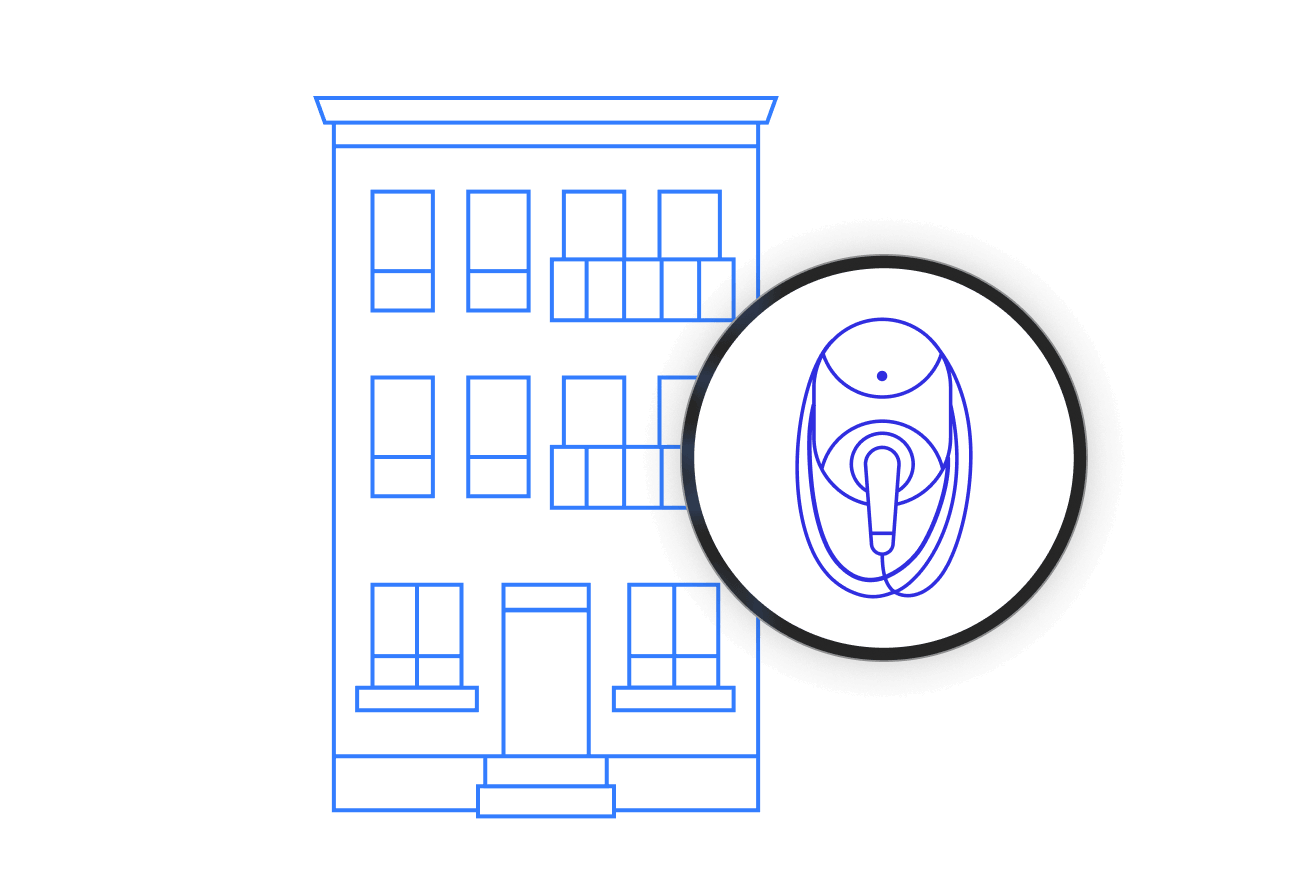
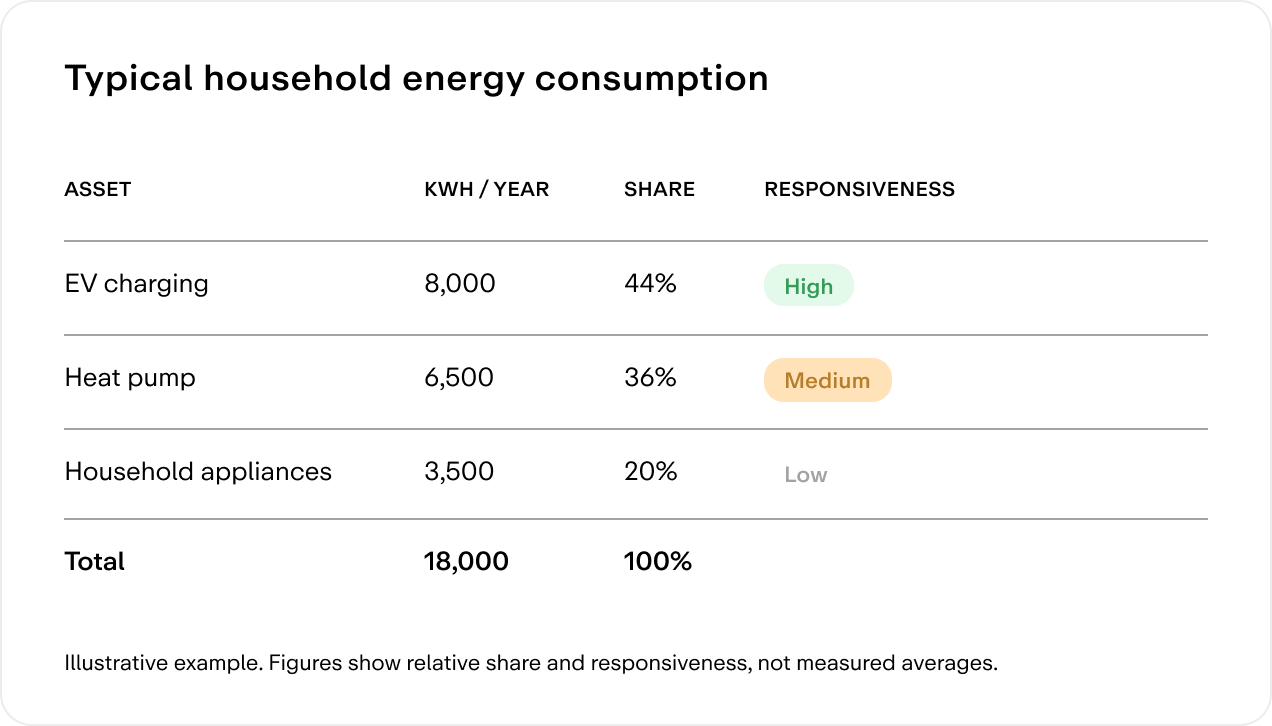
Every energy asset in the home should work as one system. Home+ connects the charge point with solar, heat pumps, batteries and the local grid — so each asset can share energy and respond to conditions, making home charging cheaper to run and simpler to manage.
The features that make it work
Fuse Protection
Monitors household current in real time and throttles charging before the main fuse trips — so your drivers never come home to a tripped breaker.
Solar Charge
Sends surplus solar into the car instead of exporting it at a low feed-in rate. Works with inverters, CT clamps, meter readers, and even solar forecasts.
Vehicle Integration
Live battery capacity and state of charge from the car itself, so SmartCharge targets a real battery level instead of an estimate — and stops at exactly the right time.
Home is where most charging happens
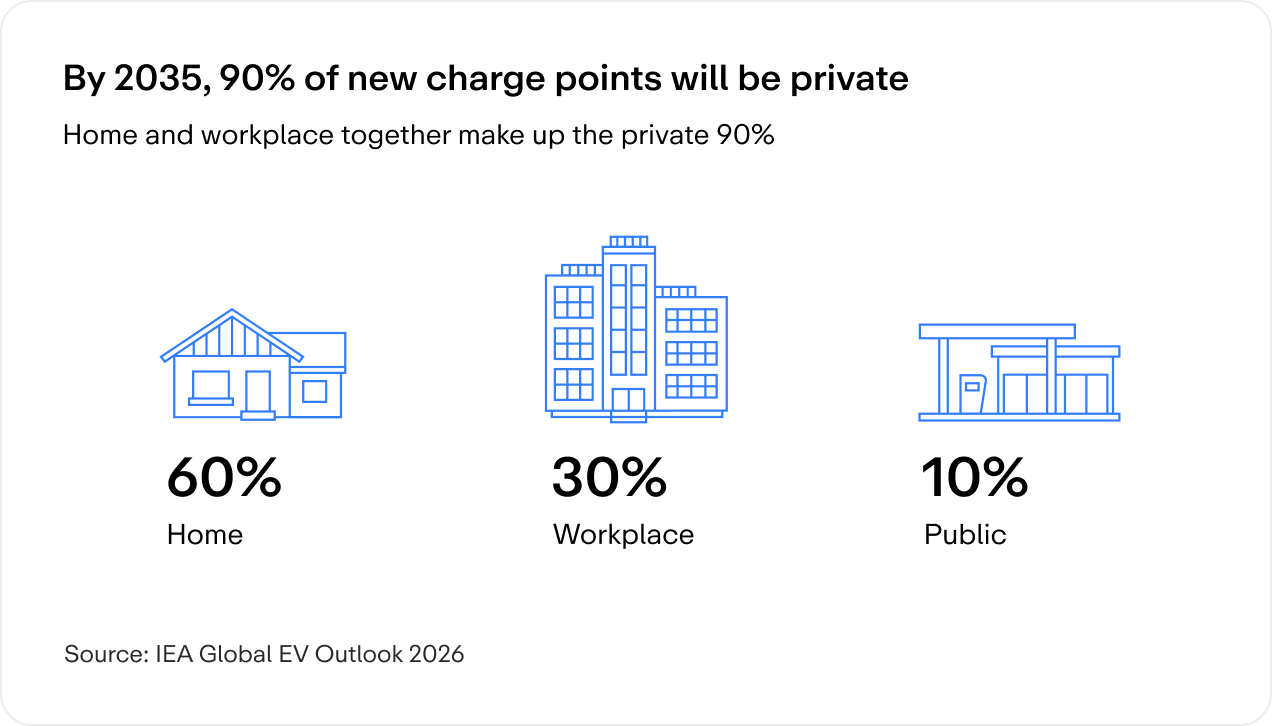
By 2035, 90% of new charge points installed will be private. The residential opportunity is bigger than public — and it’s largely unmanaged today.
Home and Home+
What separates the two plans is how advanced features are unlocked, who controls PowerBank, and how grid revenue is shared.
| HOME | HOME+ | |
| Pricing | Set per account – talk to sales for a quote | |
| Transaction fee your drivers pay | 10% | 0% |
| Charge point and member limits | Set per account, negotiable as part of packaging | |
| Advanced features | Requires PowerBank | Included – enabled by you |
| Who controls PowerBank | Monta | You do |
| Your share of PowerBank grid revenue | 50% | 50% |
A better product for your drivers. Full control for your business.
For your drivers
- Advanced features are simply included — no PowerBank step in the way unless you choose to add one
- Monta waives its fee when a driver sells energy from sharing their charge point
- Charge point and member limits negotiated for your estate rather than fixed by default
For your businesses
- You decide whether drivers must join grid services to reach the advanced features – the platform default is not to require it
- Control over whether drivers see grid services at all, whether they can manage it and whether new charge points opt in by default
- 50% of the grid services revenue from your residential estate
PowerBank – your network, your rules
Monta sets the rules
- Monta controls PowerBank
- Participation gates the advanced features
- Operator has no override
You set the rules
- You control PowerBank policy
- Advanced features included by default
- Require it, leave it off, or remove it entirely
Two layers. One platform.
Full read and write access to a driver’s home configuration. Build your own EMS on top – control charging power, switch solar modes, set fuse limits, and enrol drivers in demand response programmes without touching the Monta app.
Charging control
Set power, pause/resume, or push a TxProfile — all via the Partner API.
Solar & fuse configuration
Switch solar modes, update fuse limits, and push dynamic schedules from your own platform.
Feature & programme enrolment
Control driver access to Home features and PowerBank. Enrol charge points in demand response from your backend.
Energy integrations drivers can connect

SaveEye meter reader
Denmark, Sweden, Belgium. Reads real-time whole-home consumption – what makes SolarCharge surplus mode and dynamic fuse protection possible. Self-install by QR code or serial number.

Powerfox & Stromleser
Germany. Both enable SolarCharge. Neither supports fuse protection – for a German household that needs protection, a CT clamp is the route.

CT clamps
SyncEV, Rotec, EN+. Fitted at the main supply so Monta sees total household current, enabling SolarCharge and fuse protection where no meter-reader integration is available. Requires a qualified electrician.

Solar inverters
~24 brands via Enode, app-only setup. Feeds SolarCharge’s Solar Production mode (Beta). Reads production but not household consumption, so fuse protection is not available on this alone.

Solar forecast
No hardware at all. Estimates production from panel geometry plus weather. Beta, least accurate of the solar modes, and one panel per home today — but it removes every barrier to a driver starting.

Static limit & MQTT
A static current limit needs no device and no upgrade. A generic MQTT meter contract covers custom and third-party hardware.
FAQs
Full read and write access to all home configuration and values. Limitation: Enode integration is only supported in the app (Enode-controlled screens).
Yes. Set charging power via the TxProfile endpoint in the Partner API. Pause and resume charging via a dedicated Partner API endpoint. Define charging profiles either via direct TxProfiles or via Limit schedule / Energy Management.
A utility customer uses it to control driver access to Home and PowerBank features. A solution provider uses it to temporarily control features not yet available in the app. Other uses include home battery orchestration, demand response programme enrolment, tariff-aware charging schedules, and whole-home energy optimisation across EV, heat pump, and storage.
Each home gets its own page under Energy → Home energy: live power flow across grid, solar, household and charging; a 24-hour solar production forecast with single- and three-phase charging thresholds; the attached charge points with their phase mode, including automatic phase switching; the household’s integrations; and the per-home settings for circuit, solar charging and fuse protection.
They don’t compete. The charge point is sent the lowest of the solar limit, the fuse-protection limit and the peak-protection limit, recalculated continuously. One number reaches the charger.
Enforced. Premium endpoints reject requests from teams that are not on Home+, so the boundary holds regardless of which client is calling — app, Hub, or your own integration.
Single-phase homes cannot yet bootstrap SolarCharge. Watt-only DC hardware is unsupported, because charging limits are sent in amps over OCPP. Solar forecasts stop refreshing after roughly 48 hours. And in Germany, solar sessions and cost groups need care around the current tax treatment. All are known and on the fix list.